
Eco Friendly Fulfillment for Ecommerce is becoming a strategic priority as more brands make sustainability a core part of their logistics operations. Compostable packaging sits at the heart of this shift. Whether you’re aiming to reduce your environmental footprint or resonate with eco-conscious consumers, compostable mailers and sustainable packaging materials offer both practical benefits and powerful brand positioning.
What is Compostable Packaging?
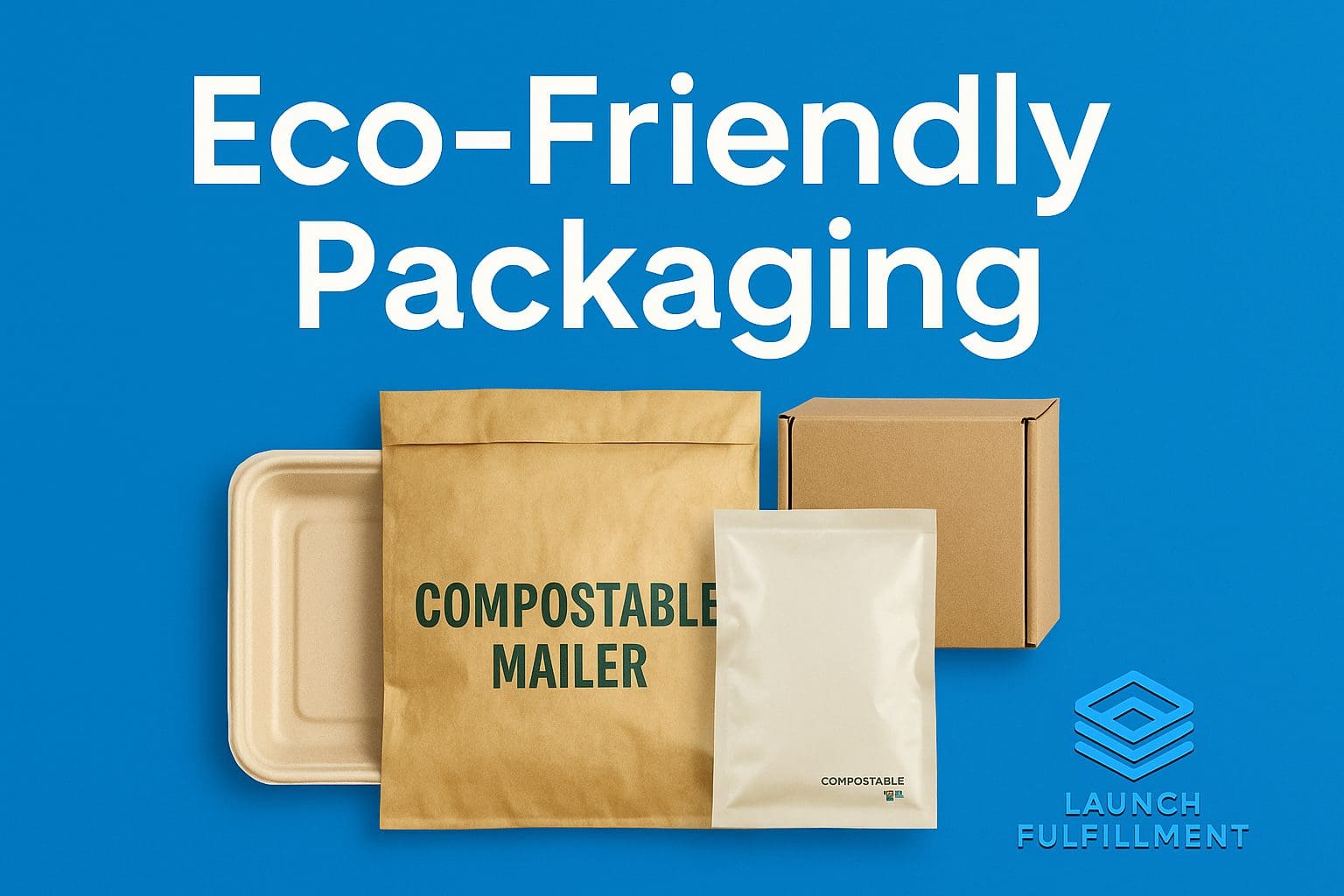
Compostable packaging refers to materials made from natural, renewable sources that break down into non-toxic components under composting conditions, typically within 90 to 180 days. Unlike conventional plastic packaging (bubble wrap) or biodegradable materials (biodegradable packaging), compostables are engineered to leave no harmful residue behind.
Common compostable materials include:
- PLA (plant-based bioplastic)
- Kraft paper and recycled cardboard boxes
- Mushroom-based trays
- Seaweed-derived film
- Reusable liners and inserts
- Biodegradable materials such as biodegradable plastics
These options not only uphold product protection standards but also support customers’ environmental values.
Explore our Guide to Product Packaging and Custom Packaging.
Sustainable Solutions
Eco Friendly Fulfillment for Ecommerce: Why Compostable Packaging Matters
Industry-leading fulfillment solutions are paving the way for sustainability in logistics. Check out some cutting-edge supply chain visibility tools from The Emerging Brands Alliance!
(Credit: The Emerging Brands Alliance)
1. Reduces Waste & Landfill Pressure
Compostable mailers and fillers decompose in weeks, significantly reducing waste. With ecommerce producing billions of packages annually, compostable packaging helps brands responsibly manage their environmental impact.
2. Builds Brand Trust & Reduces Returns
A NielsenIQ global study found that 73% of consumers would change buying habits to reduce environmental impact. Compostable packaging (like recyclable packaging made from recycled materials) can increase unboxing satisfaction, reduce return requests due to damaged goods, and boost social proof.
Return rates present significant challenges for ecommerce businesses. According to the National Retail Federation, U.S. retailers experienced return costs totaling over $816 billion in 2022, nearly double those associated with traditional brick-and-mortar retail. Implementing durable and eco-friendly packaging solutions, such as compostables, can effectively reduce damage-related returns, thereby improving overall customer satisfaction and operational efficiency.
3. Meets Regulations & Retail Standards
Retail giants like Amazon now include packaging sustainability standards in their policies. Compostable solutions help you stay compliant and ready for emerging environmental regulations.
4. Integrates with Fulfillment Operations
Unlike some eco-packaging, compostables work seamlessly in automated warehouses, pick-and-pack setups, and kitting services. Launch Fulfillment ensures these materials are compatible with your systems and workflows.
[Insert image: compostable packaging on fulfillment line]
Learn more about our kitting and assembly services.
Considerations & Challenges
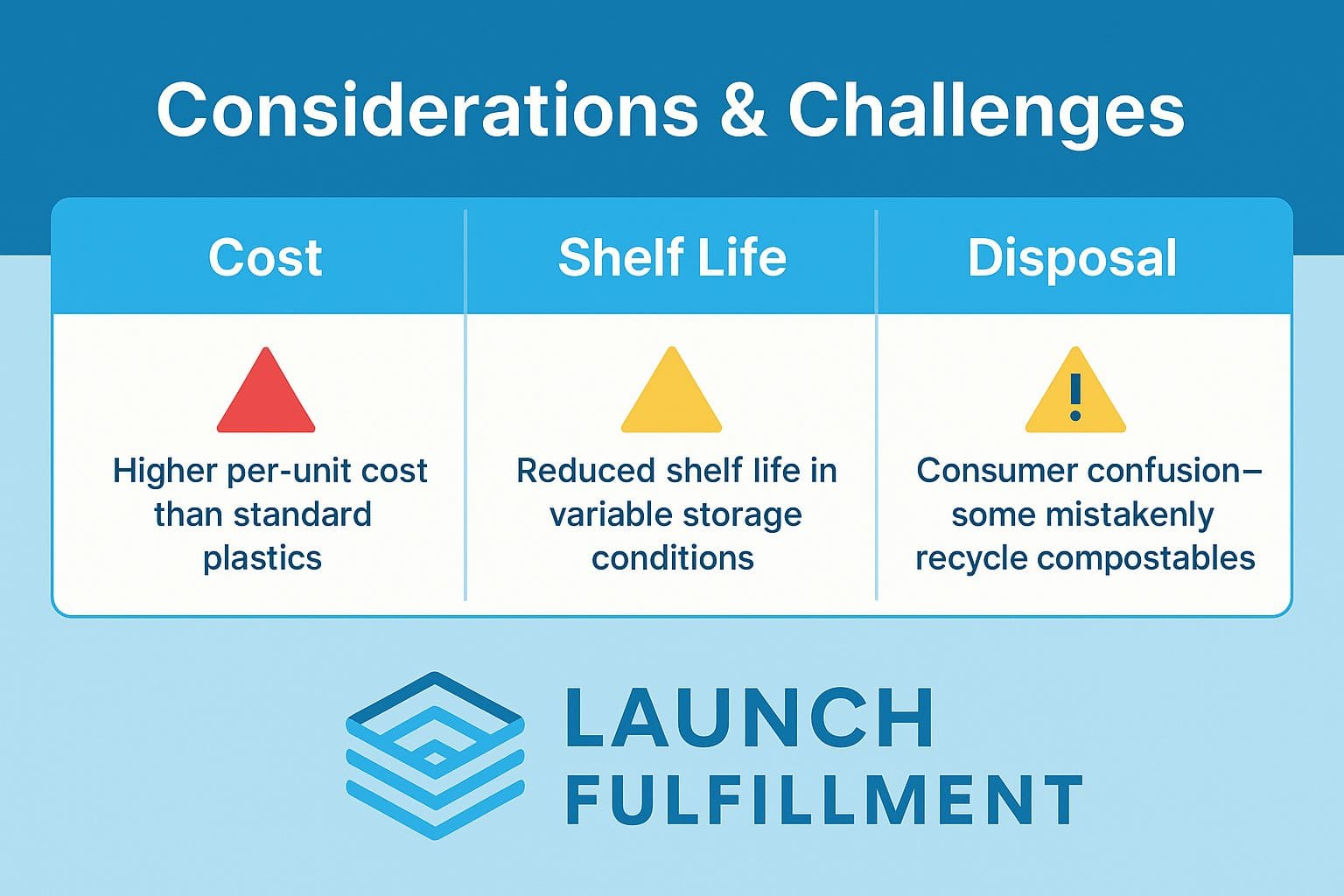
Choosing compostable packaging includes trade-offs:
- Higher per-unit cost than standard plastics
- Reduced shelf life in variable storage conditions
- Limited commercial composting infrastructure
- Consumer confusion—some mistakenly recycle compostables
To combat this, print composting instructions on packaging, include QR code links to guides, or educate via post-purchase emails.
How to Switch to Compostable Packaging
Transition smoothly with this roadmap:
- Audit SKU & packaging usage to identify opportunities
- Pilot high-visibility items with compostable mailers
- Source certified materials (ASTM D6400, BPI, OK Compost)
- Train teams on storage, handling, and workflow integration
- Provide clear disposal messaging on packaging or via email
- Manage dimensional weight—use our DIM calculator FAQ
- Measure results through customer feedback, return rates, and repeat orders
Popular Compostable Packaging Types Compared
|
Material |
Pros |
Cons |
|---|---|---|
|
Kraft Paper |
Strong, printable, consumer-friendly |
Less moisture-resistant |
|
PLA Film |
Clear, flexible, compostable |
Not curbside recyclable |
|
Mushroom Trays |
Cushioned, home compostable |
Bulky and pricier |
|
Seaweed Film |
Thin, biodegradable, innovative |
New tech—cost & availability vary |
Selecting the right combination depends on your SKUs, storage, and branding needs.
Real-World Sustainability Wins
There are several cases where companies have realized significant sustainability wins by switching to more eco-friendly packaging. Here are a few notable examples:
- Unilever: Unilever made a significant commitment to sustainable packaging through its “Unilever Sustainable Living Plan.” They focused on reducing plastic usage, increasing the use of recyclable materials, and innovating with biodegradable packaging. For example, they launched their “Love Beauty and Planet” brand with 100% recycled plastic bottles. This move not only improved their sustainability credentials but also resonated well with environmentally-conscious consumers.
- Procter & Gamble (P&G): P&G has been working on reducing its environmental footprint by implementing more sustainable packaging. One notable initiative is their partnership with TerraCycle’s Loop platform, which uses a circular shopping system with reusable packaging for products such as Tide detergent, Gilette razors, and Pantene shampoo. This approach not only reduced waste but also provided customers with a novel, environmentally friendly shopping experience.
- IKEA: IKEA has pursued a broad sustainability strategy, including the use of eco-friendly packaging. They have been transitioning from polystyrene foam to mushroom-based packaging made of biodegradable fungal mycelium. This initiative is part of IKEA’s larger goal to become a circular business by 2030, focusing heavily on renewable and recyclable materials.
- LEGO: In 2018, LEGO began phasing in sustainable materials for its packaging, aiming to use 100% sustainable materials by 2025. They started using recycled plastic bottles to produce LEGO sets, boxes, and instruction booklets, which significantly cut down on their environmental impact.
- Dell: Dell has been a leader in sustainable packaging, utilizing materials such as bamboo, mushrooms, and ocean plastics. The company’s innovative approach includes creating packaging that is easier to recycle and has a lower carbon footprint. Their bamboo packaging, for instance, is not only biodegradable but also recyclable, which significantly contributes to their sustainability goals.
- Nestlé: Nestlé committed to making 100% of its packaging recyclable or reusable by 2025. One example is their launch of paper straws for products like Nesquik and a transition towards environmentally friendly materials in their Smarties packaging. These changes have reduced their use of virgin plastics and aligned with consumer demand for sustainable products.
- Adidas: The sportswear giant partnered with Parley for the Oceans to create shoes and apparel from recycled ocean plastics. Adidas also made strides in packaging by avoiding virgin plastic and using recycled materials where possible, aiming to eliminate plastic waste entirely by 2024.
- Starbucks: Starbucks has been actively working on reducing its environmental footprint by exploring various sustainable packaging solutions, including recyclable and compostable cups. Their efforts include piloting reusable cup programs and implementing recycled materials in cups and packaging.
These companies demonstrate that transitioning to eco-friendly packaging can lead to sustainability wins while also aligning with changing consumer expectations. By innovating in packaging, these brands not only reduce their environmental impact but also often enhance brand loyalty and market appeal.
Beyond Sustainable Packaging Solutions: A Holistic Eco-Strategy
Besides sustainable materials, consider broader sustainability opportunities:
- Route optimization reduces carbon emissions per package
- Right-sized packaging minimizes void fill and DIM charges
- Carbon-neutral shipping via offset programs
- Reusable packaging models for returns and subscriptions
- Integrations with eco-conscious carriers using alternative fuels
Launch Fulfillment offers integrated services, from sourcing to data tracking, to support these initiatives.
Learn eco-conscious best practices for ecommerce with Launch Fulfillment.
Technology & Innovation in Green Fulfillment
Advanced tools and automation can elevate your sustainability approach:
- Machine learning helps forecast inventory and prevent over-purchasing
- Robotics and automation reduce picking errors and packaging waste
- EV fleets and alternative fuels cut carbon emissions
- Renewable-energy warehouses powered via solar/wind systems
These innovations are part of the evolving landscape of eco-friendly logistics.

From the CEO’s Desk
“As a Utah 3PL fulfillment company, we love the outdoors and believe the logistics sector is in a key position to make a real change with the way sustainability is handled. We’re at the forefront of the industry in this regard, and can’t wait to service our eco-conscious clientele.”
— Braden, Launch Fulfillment CEO
Final Thoughts
Compostable packaging does more than reduce waste, it enhances brand perception, aligns with regulations, improves customer satisfaction, and positions sustainability as a differentiator.
Pair it with technology, optimized logistics, and eco-minded operations, and you get a truly holistic approach to sustainable fulfillment.
Ready to Ship Smarter and Greener?
Launch Fulfillment is your trusted partner for building a scalable, eco-friendly supply chain. From packaging to kitting, automation, and carbon reduction strategies, we help brands walk the sustainability talk.
We know order fulfillment
Frequently Asked Questions About Eco-Friendly Fulfillment
What is eco-friendly e-commerce?
Eco-friendly e-commerce refers to the practice of minimizing environmental impact in online retail — from using sustainable packaging and renewable energy to reducing waste throughout the supply chain. A big focus today is on minimalist packaging, energy-efficient fulfillment centers, and optimized delivery routes that reduce emissions.
What is eco-commerce?
Eco-commerce is a broader concept that blends environmental responsibility with business and investment strategies. It encourages brands to offer products and services that support sustainability goals, from production to packaging and fulfillment.
What is green e-commerce?
Green e-commerce and eco-friendly fulfillment go hand in hand. It means running an online store in a way that’s mindful of its carbon footprint, using recyclable materials, reducing plastic, offering carbon-neutral shipping options, and working with partners who share sustainable values.
How is online shopping eco-friendly?
While shipping can generate emissions, online shopping can still be eco-friendlier than traditional retail when paired with green logistics strategies. For example, shipping items from a regional warehouse or using compostable mailers significantly reduces environmental impact. Brands can also reduce returns and excess inventory through smarter forecasting.
How can I make my eCommerce packaging more eco-friendly?
Start by switching to compostable or recyclable materials. Right-size your packages to eliminate wasted space and add clear disposal instructions for your customers. You can also audit your packaging operations to identify ways to cut back on material use and optimize dimensional weight.
What kind of packaging is considered sustainable?
Sustainable packaging includes options like kraft paper, cornstarch-based mailers, seaweed-based film, mushroom trays, and reusable containers. Look for third-party certifications like BPI or TÜV Austria to confirm compostability and compliance with local composting standards.
Let's Be Partners.

Jake Tripp
Lead Content Strategist
