
Key Takeaways
- International returns management is a major part of cross-border ecommerce success. If returns feel expensive, confusing, or risky, shoppers may hesitate before completing an international purchase.
- A clear international return policy helps reduce customer anxiety by explaining return windows, shipping costs, refund options, duties, taxes, and customs responsibilities before checkout.
- Local return centers and regional reverse logistics hubs can reduce costs by keeping returned products closer to the customer instead of shipping every item back to the home warehouse.
- International returns can affect more than customer service. Duties, taxes, customs paperwork, duty drawback, refund timing, and returned goods status can all impact profitability.
- Automated return portals, prepaid labels, RMA numbers, and multilingual support make the post-purchase journey easier for international customers and less manual for internal teams.
- Return data can help ecommerce brands identify product issues, sizing problems, regional preferences, packaging failures, and markets where reverse logistics costs may be hurting margins.
- The best international returns management strategy balances customer trust, cost control, resale recovery, inventory visibility, and scalable 3PL support across global markets.
The promise of global expansion is one of the most compelling narratives in the modern ecommerce landscape. However, for many brands, the dream of reaching international markets is frequently hampered by the logistical and financial complexities of returns. The “International Trust Gap” is the primary barrier to entry: prospective customers in foreign markets often hesitate to complete a purchase because they fear the inconvenience, high costs, and lack of clarity surrounding the return process. If your brand cannot promise a seamless path to resolution, you are effectively handicapping your conversion rates from the moment a visitor lands on your site.
At Launch Fulfillment, we see international returns management as a core part of the cross-border customer experience. A brand can win the first order with strong marketing, but it earns long-term trust when returns, refunds, customs documentation, and reverse logistics feel clear instead of confusing.
The International Trust Gap: Why Returns Define Global Growth
Understanding “Return Anxiety” in Cross-Border E-commerce
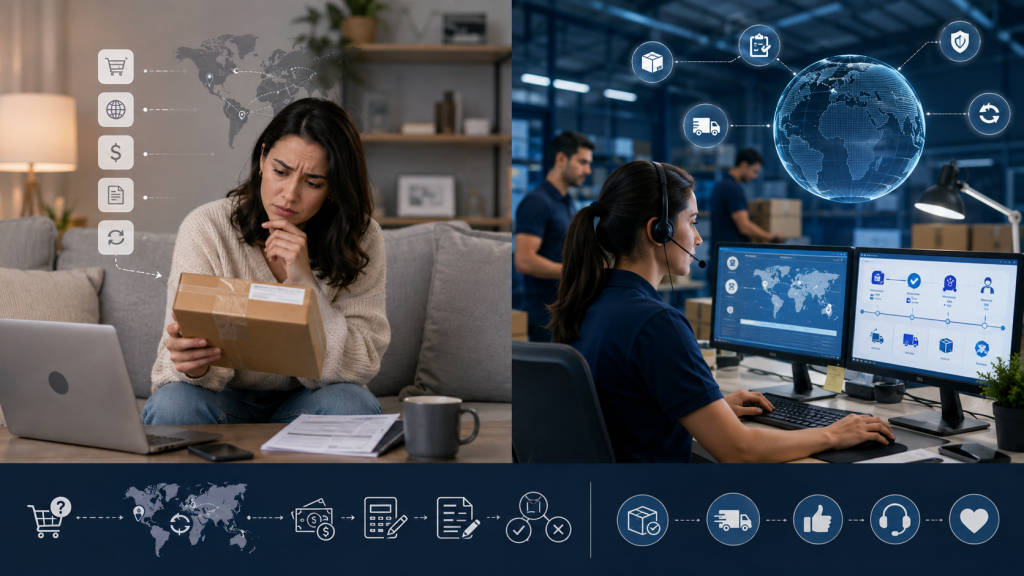
Clear international returns management helps reduce customer hesitation and build trust before and after a cross-border purchase.
“Return anxiety” is the psychological hurdle every international shopper faces. They wonder: If this sweater doesn’t fit, will I have to pay to ship it back across the ocean? Will I be stuck with a credit that is useless in my currency? This uncertainty creates massive friction. When a brand fails to address these concerns upfront, they are not just losing a single sale; they are losing the chance to build the trust necessary for long-term customer loyalty.
This is why cross-border brands need more than a shipping label. They need an operational strategy that connects ecommerce fulfillment services, local inventory visibility, customer communication, return routing, and post-purchase support into one clear process.
Shifting the Mindset: Returns as a Customer Acquisition Tool
Forward-thinking retailers treat their return policy as a marketing asset. Instead of hiding it in the footer, they showcase it as a guarantee of quality and confidence. When you position your policy as a service benefit rather than a logistical burden, it becomes a competitive advantage that sets you apart from smaller, less-equipped merchants who treat global shipping as a “buy at your own risk” endeavor.
Shopify’s 2026 returns management guide explains that ecommerce returns management covers policies, customer communication, inspection, refunds, inventory updates, and decisions about whether items are restocked or recycled. That means returns are not only a customer service issue; they are a fulfillment, inventory, and margin issue.
The Correlation Between Hassle-Free Returns and Repeat Purchase Rates
Data consistently confirms that a positive return experience is a primary driver of retention. The National Retail Federation’s 2025 Retail Returns Landscape reported that $849.9 billion in merchandise was projected to be returned in 2025, with online sales expected to see a 19.3% return rate. That return volume makes reverse logistics a core ecommerce operation rather than an occasional support task.
Launch Fulfillment’s reverse logistics resources explain why returned inventory needs a clear path back through inspection, restocking, refurbishment, resale, donation, recycling, or disposal. The more international the order, the more important that path becomes.
Need International Returns That Do Not Break the Customer Experience?
Launch Fulfillment helps ecommerce brands build scalable fulfillment and returns workflows that support global growth, inventory visibility, customs-aware operations, and a cleaner post-purchase experience.
Designing a Strategic International Return Policy
Localizing Your Policy: Cultural Expectations Across EU, North America, and APAC
One size does not fit all in international e-commerce. German consumers, for instance, are historically accustomed to high return rates and expect robust, easy return options as a baseline requirement. In contrast, APAC markets may have different expectations regarding the speed of communication or specific payment methods. Aligning your policy with the local culture is critical for success.
Regulatory expectations also vary by market. The European Union explains that many online purchases are covered by a 14-day right of withdrawal, with specific rules around return costs and defective goods. For brands selling internationally, return policy localization should account for customer expectations, legal requirements, refund timing, language, and operational feasibility.
Dynamic Return Rules: When to Offer “Keep It” Refunds to Protect Margins
A decision matrix for dynamic returns: comparing product value against international shipping costs to protect your profit margins.
For low-value, high-weight items, the cost of return shipping often exceeds the product’s value. In these instances, implementing a “Keep It” policy—where the customer is refunded without the requirement to ship the item back—is a strategic move. This minimizes your reverse logistics overhead while simultaneously providing the customer with a frictionless experience that builds significant brand equity.
For brands working through a 3PL fulfillment services partner, dynamic rules can be tied to product value, condition, market, return reason, SKU velocity, inventory position, and the cost to bring the item back into sellable stock.
Transparency as a Sales Driver: Communicating Terms Before the Checkout
Ambiguity at checkout is a conversion killer. Your return terms—including shipping costs, windows for return, and any potential restocking fees—must be clear before the payment button is clicked. When customers know exactly what the return process entails, they feel secure in their purchase, effectively mitigating “International Anxiety.”
This is especially important for brands choosing between DDP and DAP shipping strategies. Launch Fulfillment’s guide to DDP vs. DAP explains how duties, taxes, customs responsibilities, and delivery expectations can affect the cross-border customer experience before and after the order is placed.
The Customer-Facing Interface: Reducing Friction in the Post-Purchase Journey
Automated Return Portals: The Shift to Self-Service Logistics
Manual returns, handled via email or phone, are slow and expensive. Modern brands leverage automated return portals that guide customers through a step-by-step digital process. This self-service model empowers the user, reduces the workload on your customer service team, and provides immediate clarity on the status of their request.
Automation also keeps teams aligned. A strong returns workflow should connect the customer request, eligibility rules, RMA creation, label generation, warehouse receiving, refund approval, and inventory status. That requires dependable order management and order processing, not just a customer-facing form.
Generating Pre-paid Return Labels and RMA Numbers
The ultimate goal is to provide the customer with a downloadable, pre-paid return label the moment they initiate the process. Removing the burden of sourcing shipping labels or calculating customs documentation is essential. Integrating RMA (Return Merchandise Authorization) numbers into these labels ensures your warehouse can track and process incoming shipments efficiently.
For international returns, the RMA should connect to original order data, SKU details, customs status, return reason, customer communication, and final disposition. That gives the warehouse a cleaner process when the item arrives and helps prevent returned inventory from sitting unprocessed.
Multilingual Support: Breaking Down Communication Barriers in Customer Service
Global growth requires global support. If a customer has a query about their return, they should not be forced to navigate a language barrier. Providing multilingual customer service, or at the very least, translating your automated return portal and FAQs, shows that your brand respects the customer’s local needs.
International ecommerce is won through clarity. Return pages, refund timing, customs responsibility, return shipping costs, and eligibility rules should be understandable before the sale and easy to follow after delivery.
Behind the Scenes: Building a Robust International Reverse Logistics Network
The Case for Local Return Centers and In-Country Facilities
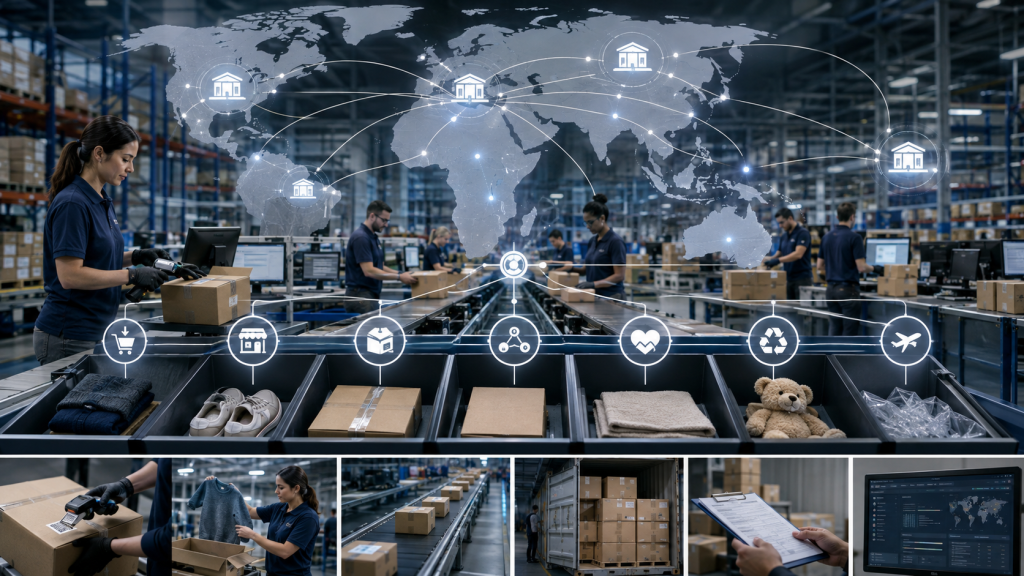
Local return centers and regional hubs help ecommerce brands reduce cross-border return costs and recover more value from returned inventory.
For brands expanding into the UK or Europe, Launch Fulfillment’s UK fulfilment capabilities can support a more regional approach to inventory, shipping, and returns. Localized fulfillment infrastructure can reduce friction by keeping inventory closer to the customer and giving returned goods more options than a costly return-to-origin path.
Consolidation Strategies: Reducing Shipping Costs Through Regional Hubs
By partnering with logistics providers to consolidate returns at regional hubs, you save significantly on cross-border shipping costs. Bulk shipments from a regional facility back to your primary warehouse or a secondary market partner are much more economical than thousands of individual parcels.
Regional consolidation also gives brands more time to make better decisions. A returned product can be inspected, graded, held, resold locally, donated, liquidated, or returned in bulk depending on the item’s value and market demand.
Partnering with 3PLs and International Logistics Providers
Many brands benefit from utilizing established third-party logistics infrastructure instead of building an international returns network from scratch. Working with a specialized 3PL provider allows you to tap into existing warehouse operations, returns workflows, inventory systems, and cross-border expertise without carrying every operational burden internally.
Launch Fulfillment’s guide on international ecommerce order fulfillment strategy explains why global growth requires more than shipping into new countries. Brands also need inventory planning, delivery expectations, cost controls, and operational support that can scale as demand grows.
Build a Cross-Border Fulfillment Strategy That Includes Returns
International growth should not stop at outbound shipping. Launch Fulfillment helps brands think through regional inventory placement, returns routing, customs-aware workflows, and scalable 3PL support for cross-border ecommerce.
Navigating Customs, Duties, and Global Trade Compliance
Managing Customs Paperwork and Digital Declarations
Customs complexity is the most common reason for stalled returns. Utilizing digital declarations ensures that all necessary documentation is submitted accurately and in advance. This prevents parcels from sitting in customs limbo, which can result in storage fees and extreme customer frustration.
When returns cross borders, documentation needs to match the original shipment, returned goods status, value, product classification, and destination rules. A fulfillment partner with international experience can help reduce preventable delays caused by missing or inconsistent information.
Duty Drawback and Recovery: Protecting Your Bottom Line on Returned Goods

International returns can affect duties, taxes, customs documentation, refunds, and margin recovery when goods cross borders.
U.S. Customs and Border Protection explains that duty drawback is the refund of certain duties, internal revenue taxes, and fees collected upon importation when eligible merchandise is later exported or destroyed. In the UK, HMRC also provides guidance on refunds and waivers on customs debt, which makes documentation discipline especially important for brands trying to recover value from returned goods.
Automated Duty Calculations: Preventing “Sticker Shock” for International Shoppers
Transparency in duties and taxes is just as important as the return policy. Using software that calculates these costs accurately at the time of purchase prevents the customer from receiving a surprise invoice later, which is a major contributor to international cart abandonment.
For brands using bonded inventory strategies, Launch Fulfillment’s UK bonded warehouse services can support more control over duties, VAT, customs-approved storage, and flexible release options. That kind of infrastructure matters when international returns, resale, and inventory placement are part of the same strategy.
Speed and Liquidity: The Financial Side of International Returns
Instant Refunds vs. Store Credit: Incentivizing Retention
While a full refund to the original payment method is standard, incentivizing store credit is a powerful way to retain revenue. Many customers are willing to accept store credit if it is processed instantly. This keeps the capital within your ecosystem and encourages a second attempt at finding the right product.
The right refund strategy depends on customer trust, return reason, product condition, fraud risk, and lifetime value. Store credit can protect revenue, but only if the process feels fair and the customer understands the option clearly.
Currency Localization: Issuing Credits in the Customer’s Local Currency
Providing a refund in a foreign currency or an unpredictable exchange rate creates friction. Always issue refunds or credits in the currency the customer used for their original transaction. This preserves the value of the credit for the shopper and simplifies the accounting process for your team.
For finance and customer support teams, currency localization also reduces dispute risk. The fewer surprises a shopper sees during refund processing, the more likely they are to trust the brand after the return.
Recommerce and Secondary Markets: Recovering Value from International Returns
Not every return needs to be brought back to the home warehouse. Explore local secondary markets or “recommerce” platforms where returned items can be sold, donated, or liquidated within the country of origin. This strategy recovers value while reducing the carbon footprint of your logistics network.
This is where inventory management and return disposition rules work together. If a product can be resold locally, it may be more profitable to keep it near demand instead of paying to move it across borders again.
Data-Driven Optimization: Using Returns to Improve Global Operations
Analyzing Return Data to Identify Manufacture Line and Sizing Issues
Returns are the most honest feedback loop available. If a specific region reports a high return rate for a particular garment due to sizing issues, you have actionable data to adjust your size charts, improve product descriptions, or modify production lines. Treat each return as a data point that helps you prevent the next one.
For apparel, beauty, supplements, and other category-specific brands, return data can reveal whether the issue is sizing, product education, packaging damage, quality control, customer expectations, or fulfillment accuracy. Launch Fulfillment’s fulfillment services by industry help brands align storage, packaging, kitting, handling, and returns workflows with product-specific needs.
Monitoring KPIs: Cost Per Return vs. Customer Lifetime Value (CLV)
Effective returns management requires constant monitoring of key performance indicators. Tracking the cost per return against the CLV allows you to make informed decisions about which markets are truly profitable and where your logistics processes need improvement.
KPIs to monitor include return rate by market, reason code, refund timing, resale recovery rate, cost per return, exchange rate, store credit adoption, fraud flags, and time to restock. The goal is not just to process returns faster, but to learn which markets and products are actually profitable after reverse logistics costs are included.
Website Localization: Improving Product Descriptions to Prevent Returns
Often, returns happen because the product did not match the customer’s expectations. By improving product photography, video demonstrations, and descriptive copy that accounts for regional preferences, you can lower the frequency of returns. A well-informed customer is a permanent customer.
Better product education reduces preventable returns before they happen. Size charts, ingredient details, compatibility notes, material explanations, local language support, and delivery expectations all help customers make a more confident purchase.
The Global Readiness Checklist: Is Your Brand Ready for Scale?
To succeed internationally, you must ensure your infrastructure is ready. First, audit your current return volume and identify your “leaky buckets.” Second, prioritize regional hubs in your highest-traffic markets. Third, automate your label generation and customs paperwork. Finally, foster a culture that views returns as an opportunity for continuous improvement rather than a failure of operations.
Brands should also evaluate whether their 3PL partner can support the full international order lifecycle: receiving, storage, outbound fulfillment, customs-aware shipping, returns processing, inventory updates, and reporting. Launch Fulfillment’s fulfillment and 3PL warehousing resources explain how warehousing, inventory management, order fulfillment, and shipping work together to support ecommerce growth.
Final Thoughts
International returns management is an essential pillar of global e-commerce success. By moving away from the view of returns as a purely logistical liability and embracing them as a strategic tool for customer acquisition and product intelligence, you position your brand for sustainable growth. The “Data-Loop Approach”—wherein every return provides intelligence that improves future product and policy decisions—is the key to turning friction into loyalty.
To implement this effectively:
- Be Transparent: Ensure all return and duty terms are visible before the checkout.
- Be Accessible: Invest in automated portals to minimize manual customer service overhead.
- Be Strategic: Use “Keep It” policies for low-margin items and consolidation for high-value logistics.
- Be Analytical: Let return data drive your product and sizing decisions.
As you expand your global footprint, remember that the goal is not to eliminate returns entirely, but to master the process so that the post-purchase experience is as compelling as the initial sale. When you treat the customer’s inconvenience with professional care and operational efficiency, you build a foundation of trust that transcends borders, currencies, and cultures, ensuring that your international ecommerce journey remains profitable and scalable for years to come.
Launch Fulfillment helps ecommerce brands build fulfillment systems that can support growth across markets, channels, and customer expectations. You can learn more about the company’s operational approach on the About Launch Fulfillment page.
Make International Returns Easier to Manage
Cross-border returns do not have to become a margin drain or customer experience problem. Launch Fulfillment can help you build a scalable fulfillment strategy that supports shipping, returns, inventory visibility, and international growth.
FAQ: Cost To Outsource Fulfillment
How much does it cost to outsource fulfillment?
The cost to outsource fulfillment depends on your order volume, SKU count, storage needs, packaging requirements, shipping profile, returns volume, and any value-added services you need. Most 3PL pricing includes fees for receiving, storage, pick and pack, packaging materials, shipping, kitting, returns, and technology access. The best way to compare providers is to calculate your true cost per order, not just the advertised pick and pack fee.
Is outsourcing fulfillment cheaper than doing it in-house?
Outsourcing fulfillment can be cheaper than in-house fulfillment when you factor in warehouse rent, labor, equipment, software, utilities, insurance, shipping management, and operational time. In-house fulfillment may look less expensive at low order volume, but it often becomes harder to manage as orders, SKUs, returns, and customer expectations grow. A 3PL can help turn fixed warehouse overhead into a more scalable operating expense.
What fees are included in outsourced fulfillment pricing?
Outsourced fulfillment pricing usually includes receiving fees, monthly storage fees, pick and pack fees, packaging costs, shipping charges, kitting or assembly fees, returns processing fees, and technology or account management fees. Some providers may also charge for long-term storage, special projects, additional picks, custom packaging, manual order changes, or peak season labor.
What is a pick and pack fee?
A pick and pack fee is the charge for locating an item in the warehouse, pulling it from inventory, preparing it for shipment, packing it, and getting it ready for carrier handoff. Some 3PLs charge a flat pick and pack fee, while others charge a base order fee plus additional fees for each extra item, insert, bundle, or special handling requirement.
What is the biggest cost in outsourced fulfillment?
Shipping is usually the biggest variable cost in outsourced fulfillment. Carrier rates, package dimensions, shipping zones, fuel surcharges, residential delivery fees, peak season fees, and dimensional weight can all affect your final shipping cost. That is why packaging optimization, carrier selection, and inventory placement are important parts of controlling fulfillment spend.
How do I calculate my true cost per order?
To calculate true cost per order, add your total fulfillment costs, shipping costs, packaging costs, storage fees, technology fees, and returns handling costs, then divide that number by your total order volume. This gives you a clearer view of what each order actually costs to fulfill and helps you compare 3PL providers more accurately.
When should an ecommerce brand outsource fulfillment?
An ecommerce brand should consider outsourcing fulfillment when in-house operations start slowing growth, creating shipping errors, taking too much team time, or limiting scalability. Common signs include rising order volume, inventory inaccuracies, delayed shipments, high returns friction, limited warehouse space, and founders or employees spending too much time packing boxes instead of growing the business.
