
Key Takeaways
-
The cost to outsource fulfillment is not limited to pick and pack fees. Receiving, storage, packaging, shipping, kitting, returns, technology fees, and surcharges all contribute to the true cost per order.
-
In 2026, ecommerce brands need to evaluate fulfillment pricing more carefully because carrier rates, dimensional weight rules, labor costs, fuel surcharges, and warehouse overhead continue to affect margins.
-
Shipping is usually the highest variable cost in outsourced fulfillment, especially when brands are not optimizing package dimensions, shipping zones, carrier selection, and surcharge exposure.
-
A low fulfillment quote can become expensive if it hides extra fees for receiving, additional picks, long-term storage, custom packaging, returns processing, WMS access, or manual exceptions.
-
The best way to compare fulfillment providers is to calculate your true cost per order, including fulfillment labor, shipping, packaging, returns handling, storage, and order volume.
-
Outsourcing fulfillment can shift warehouse costs from fixed overhead to scalable operating expenses, helping growing ecommerce brands avoid leases, staffing challenges, equipment costs, and operational bottlenecks.
-
The right 3PL partner should help you reduce fulfillment cost waste, improve inventory visibility, optimize packaging, control shipping spend, and protect profitability as order volume grows.
In 2026, ecommerce brands are under more pressure than ever to protect profitable unit economics. Logistics is no longer merely a back-office expense; it is a critical competitive moat. For modern merchants, the decision to use a third-party logistics (3PL) provider is no longer just about offloading labor; it is about scaling infrastructure while protecting margins. However, with carrier rate changes, surcharge complexity, warehouse labor costs, and dimensional weight pressure, many merchants are left wondering if their fulfillment costs are competitive or if they are suffering from “fee creep.” This guide breaks down the true cost of outsourced fulfillment in 2026, providing the financial intelligence necessary to audit your providers and optimize your supply chain.
At Launch Fulfillment, we believe the real question is not just “How much does outsourcing fulfillment cost?” The better question is whether your fulfillment model gives you the visibility, flexibility, and cost control needed to scale profitably. A cheap fulfillment quote can become expensive fast if it hides storage fees, receiving delays, poor inventory accuracy, packaging waste, returns friction, or inflated shipping costs.
The Evolving Landscape of Fulfillment Costs in 2026
Fulfillment is undergoing a structural transformation as macroeconomic pressures force a re-evaluation of traditional service models.
Why Old Fulfillment Pricing Benchmarks Are Obsolete
The pricing benchmarks that defined the last few years are no longer reliable. Warehouse labor, commercial real estate, carrier surcharges, fuel volatility, dimensional weight rules, and accessorial fees continue to shift the true cost of fulfillment. When analyzing your logistics spend in 2026, do not rely on outdated rules of thumb. Instead, evaluate your actual cost per order, storage utilization, surcharge exposure, packaging efficiency, return processing costs, and inventory velocity.
Carrier pricing is also moving quickly. FedEx’s 2026 service guide is effective January 5, 2026, and UPS lists 2026 rate and surcharge updates that include changes to service guides, residential surcharges, remote area surcharges, international fuel surcharges, and non-compliant label fees. USPS also published 2026 domestic competitive product pricing and mailing standards changes through the Federal Register. For ecommerce brands, those updates make it even more important to compare your actual invoice-level costs against your fulfillment model, not just base rates.
The Shift from “Service Provider” to “Strategic Partner”
The most successful brands now treat their 3PL as a strategic extension of their team. This transition means moving away from a transactional mindset where you pay for tasks like picking and packing and toward a partnership where the 3PL optimizes your inventory placement, packaging, storage, and carrier routing to reduce your total cost per order.
A strong fulfillment partner should help you understand more than line-item fees. Launch Fulfillment’s 3PL fulfillment services are built around warehousing, inventory visibility, order processing, shipping, returns, and strategic support so brands can scale without losing control of margin.
Want Fulfillment Pricing You Can Actually Forecast?
Launch Fulfillment helps ecommerce brands understand the full cost of fulfillment, including receiving, storage, pick and pack, packaging, shipping, kitting, returns, and value-added services, so hidden fees do not quietly eat into your margins.
The Anatomy of a 3PL Invoice: Primary Cost Drivers
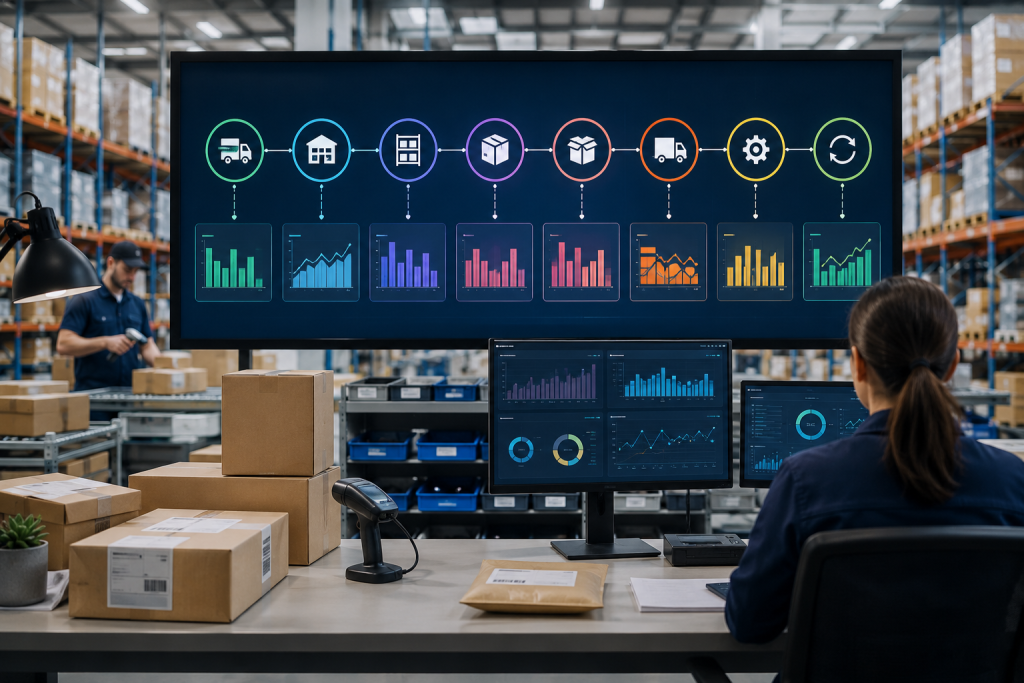
Outsourced fulfillment costs include more than pick and pack fees. Receiving, storage, packaging, shipping, kitting, returns, and technology can all affect total cost per order.
A breakdown of the core cost components found on a standard 3PL invoice.
A 3PL invoice can be a labyrinthine document. To manage fulfillment costs, you must dismantle the bill into its core components.
Onboarding and Integration Fees: The Initial Investment
Most providers charge an upfront fee for system integration, account setup, and mapping data between your ecommerce storefront and their warehouse management system (WMS). While these costs can feel like an unnecessary hurdle, they are the baseline investment for long-term automation and accurate inventory synchronization.
Those setup costs should result in cleaner data flow, not just an administrative charge. When ecommerce platforms, order data, inventory counts, and shipping workflows are connected properly, brands get a stronger foundation for order management and order processing.
Receiving and Inbound Freight: Getting Inventory into the Network
Your costs start the moment your inventory arrives at the fulfillment center. Providers charge for labor associated with unloading containers, inspecting pallets, and performing SKU verification. Inefficient inbound processes lead to delays, which can trigger detention, demurrage, storage overflow, or receiving delays costs that silently erode your bottom line if your inbound workflows are not tightly managed.
Clean inbound freight depends on accurate carton labels, SKU counts, supplier documentation, appointment scheduling, and warehouse receiving standards. Launch Fulfillment’s fulfillment warehousing facilities support the receiving, storage, and order processing infrastructure that growing brands need when inventory starts moving at scale.
Inventory Storage Fees: Understanding Pallet, Bin, and Shelf Pricing
Storage is a major variable cost. Whether you are billed by the pallet, the shelf, the cubic foot, or the bin, the fundamental driver is the “dwell time” of your products. Stagnant inventory is expensive; it takes up precious warehouse space and incurs recurring fees. Efficient inventory turnover is your best defense against high storage costs.
This is where inventory management becomes a direct cost-control function. If products sit too long, use inefficient space, or lack accurate velocity data, storage becomes more expensive even before an order is shipped.
Order Processing: The Fundamentals of Pick and Pack Fees
This is the core of fulfillment. A typical “pick and pack” fee covers the labor required to locate your item in the warehouse, pull it from inventory, select the correct packaging, and finalize the order. Be wary of providers who offer a low “pick” fee but inflate costs through surcharges on additional items, packaging materials, special handling, or manual order exceptions.
For most ecommerce brands, pick and pack fees are one of the most visible parts of outsourced fulfillment pricing. Launch Fulfillment’s pick, pack, and ship services help brands understand how picking accuracy, packaging logic, label generation, and carrier handoff work together inside a scalable fulfillment process.
Shipping Costs: The Largest Variable in Your Budget
Shipping costs represent the most significant portion of your total fulfillment spend, often accounting for the majority of the monthly invoice.
Carrier Fees and 2026 Rate Changes
Carrier rate changes in 2026 make it critical to monitor your actual shipping spend. Base rates are only one part of the cost. Residential delivery charges, delivery area surcharges, fuel surcharges, address corrections, oversized package fees, additional handling, and peak or demand surcharges can all increase your effective shipping cost.
FedEx, UPS, and USPS all maintain current shipping rate and service resources that merchants should review regularly. But even when rate guides are public, most ecommerce brands still need invoice-level reporting to understand their effective cost by zone, service level, package size, and product category.
Carrier pricing should be reviewed regularly because rate tables, surcharges, fuel charges, and service changes can affect your actual cost per order. Launch Fulfillment’s guide to shipping and handling costs can help brands think through the real cost of shipping beyond the label price.
Shipping Zones and the Financial Benefit of Distributed Inventory
Shipping zones determine the price based on distance. By utilizing a 3PL with a network of fulfillment centers, you can store inventory closer to your customers. This strategy reduces the number of zones a package crosses, directly lowering your shipping costs and increasing delivery speed a vital metric for modern consumer expectations.
Launch Fulfillment’s guide to shipping zones explained breaks down why distance matters for ecommerce profitability. For brands with national demand, inventory placement can be one of the most powerful ways to reduce shipping cost while improving delivery speed.
Dimensional (DIM) Weight: How Product Size Dictates Your Shipping Spend
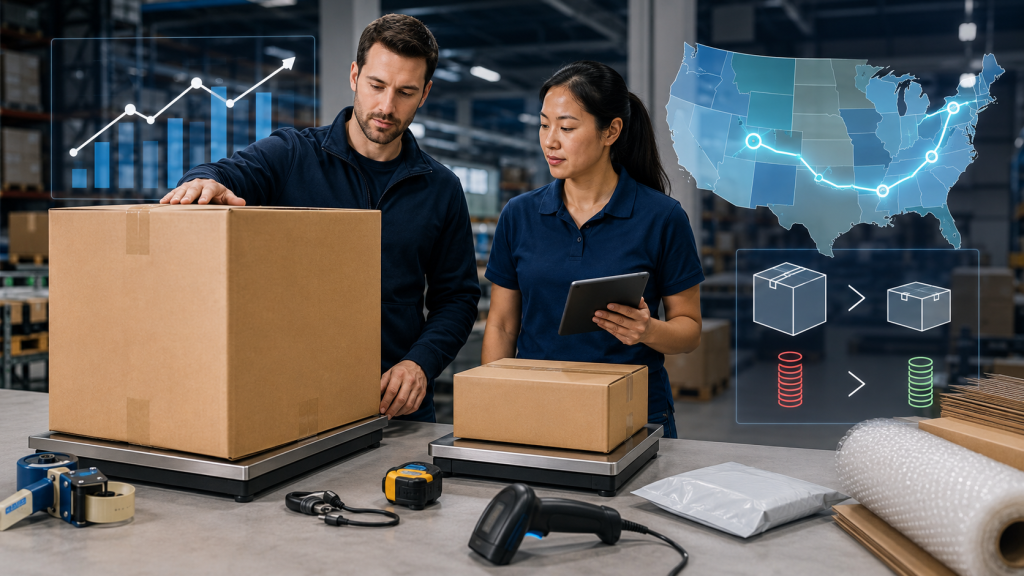
Dimensional weight can make oversized packaging more expensive, which is why right-sized cartons are a major part of fulfillment cost control.
UPS advises shippers to use accurate package dimensions to avoid shipping charge corrections, while USPS package standards show that package size, weight, and shape can affect pricing. Brands can use Launch Fulfillment’s dimensional weight calculator FAQ to understand how box size can change billable weight before those costs appear on an invoice.
Surcharges and Peak Season Adjustments
Fuel surcharges, residential delivery fees, delivery area fees, manual handling fees, and peak-season surcharges are standard, yet they are often overlooked until the invoice arrives. Audit these fees monthly; if a carrier consistently applies surcharges for incorrect addresses, oversized packages, manual handling, or non-compliant labels, it may indicate a failure in your upstream data accuracy or packaging process.
For brands managing seasonal spikes, surcharges should be planned before peak season, not discovered after invoices arrive. Address validation, carton optimization, carrier service selection, and clean order data can all reduce preventable shipping waste.
Reduce the Shipping Waste Hiding in Your Fulfillment Costs
Shipping is usually the largest variable in outsourced fulfillment. Launch Fulfillment helps brands optimize packaging, understand dimensional weight, reduce zone-related costs, and build a fulfillment strategy that protects margin as order volume grows.
The “Hidden” Costs That Impact Your Bottom Line
Beyond the standard line items, there are several “soft” costs that can turn a profitable order into a loss.
Reverse Logistics: The Real Price of Processing Returns
Returns are an expensive, often chaotic part of the supply chain. Processing a return involves receiving, inspecting, restocking, repackaging, disposing of damaged goods, updating inventory records, and communicating return status. If your return process is manual or inefficient, the cost of processing can exceed the value of the item itself.
Launch Fulfillment’s guide to reverse logistics explains why returns should be treated as part of the fulfillment system. A slow or unclear returns workflow can trap sellable inventory, increase support tickets, and quietly raise the true cost of fulfillment.
Kitting and Value-Added Services (VAS)
Value-added services like custom labeling, kitting, bundle assembly, personalized inserts, retail prep, and product rework provide a premium brand experience but incur additional labor costs. Always perform a cost-benefit analysis before offering complex unboxing experiences to ensure the increase in customer lifetime value (CLV) justifies the labor-intensive packaging requirements.
For brands that use bundles, subscription boxes, influencer kits, or branded inserts, kitting and assembly services can be valuable, but the labor should be documented clearly in the pricing model, so your team understands the true cost of the experience.
Packaging Materials: Standard vs. Custom Branded Solutions
While custom branded packaging enhances the customer experience, it often carries a significant cost premium and space requirement. Using standard, right-sized packaging reduces both material costs and DIM weight fees.
The EPA’s sustainable packaging guidance notes that efficient packaging can reduce waste and help companies save money. For ecommerce brands, packaging decisions should balance brand presentation, product protection, storage footprint, material cost, and dimensional weight.
Technology and WMS Access Fees
Most 3PLs charge a monthly fee for access to their WMS. This fee is often justified by the level of real-time inventory visibility and reporting provided. If the platform does not offer actionable insights, you are likely overpaying for access to static, useless data.
A strong warehouse management system should give brands usable visibility into stock levels, order status, shipment activity, inventory movement, and exceptions. If your WMS fee does not help you make better decisions, it is worth questioning.
In-House vs. Outsourced: A CFO-Level Financial Comparison
Deciding between in-house fulfillment and outsourced fulfillment requires a deep dive into your operational overhead.
Capital Expenditure (CapEx) vs. Operating Expense (OpEx)
In-house fulfillment forces you to carry the weight of CapEx: forklifts, racks, warehouse security systems, equipment, software, packing stations, and warehouse improvements. Outsourced fulfillment shifts this burden into OpEx, making your logistics spend a variable cost that scales with your actual order volume.
This is one of the biggest financial reasons brands compare 3PL vs. in-house fulfillment. In-house may offer control, but it also creates fixed costs, staffing responsibilities, warehouse leases, and operational complexity that do not disappear during slow months.
The Burden of Warehouse Leasing, Utilities, and Fixed Overhead in 2026
Leasing commercial space is an expensive long-term commitment. In 2026, warehouse space, utilities, insurance, equipment, software, and labor planning all need to be evaluated as part of the true cost of self-fulfillment. The flexibility to pay only for the space and services you need through a 3PL can be a major financial advantage for growing brands.
Commercial warehouse commitments can also limit strategic flexibility. If your demand shifts by region, season, or channel, fixed warehouse space may leave you paying for capacity that no longer matches your growth pattern.
Navigating Labor Shortages and Warehouse Staffing Costs
Hiring and training warehouse staff is one of the most difficult challenges for merchants. Outsourced providers manage the peaks and valleys of staffing needs, shielding you from the volatility of the labor market and the administrative burden of human resources.
The U.S. Bureau of Labor Statistics’ employment and wage data reinforces that labor cost analysis should be part of fulfillment planning. When a brand keeps fulfillment in-house, it takes on hiring, training, supervision, scheduling, turnover, overtime, safety procedures, and productivity management.
The Opportunity Cost of Self-Fulfillment
If your team is spending 20 hours a week packing boxes, they aren’t focusing on customer acquisition, product development, retention, merchandising, or brand strategy. The opportunity cost of self-fulfillment is often higher than the actual monetary cost of hiring a 3PL.
That opportunity cost becomes clearer as the business scales. Founders and operators may start by saving money with self-fulfillment, but eventually the hours spent receiving inventory, packing orders, chasing shipping issues, and processing returns can prevent higher-value growth work.
Calculating Your True Cost Per Order (CPO)

True cost per order gives ecommerce brands a clearer view of fulfillment costs, including shipping, packaging, returns, storage, surcharges, and labor.
The CPO Formula for E-commerce Operators
Your CPO is the sum of your total fulfillment costs, shipping costs, packaging materials, and the costs associated with returns, divided by your total order volume. The formula is: (Total Fulfillment Costs + Shipping Costs + Packaging + Returns Handling) / Total Order Volume. Tracking this metric consistently allows you to identify where “fee creep” is occurring.
For brands comparing providers, Launch Fulfillment’s 3PL pricing models guide explains how different fee structures can affect predictability, scalability, and total fulfillment cost. CPO is most useful when you track all cost categories, not just the pick fee.
Benchmarking Your Costs by Industry
Costs vary significantly by sector. An electronics company with low-volume, high-value goods will have a very different cost structure than a CPG brand shipping bulk, low-margin items. Understand your industry’s benchmarks to ensure you aren’t paying a premium for standard service.
Launch Fulfillment’s fulfillment services by industry show why product category matters. Supplements, skincare, beauty, apparel, and subscription brands can all require different handling, packaging, compliance, kitting, and returns workflows.
Measuring the Impact of Order Accuracy on Customer Lifetime Value (CLV)
Order accuracy is the silent killer of CLV. If your 3PL is consistently shipping the wrong items, your returns increase and customer loyalty drops. A 3PL with 99.9% accuracy is worth a higher price point than a cheaper provider that suffers from regular inventory discrepancies.
Price matters, but accuracy often matters more. A lower-cost provider can become expensive if mistakes create returns, reships, support tickets, refunds, negative reviews, or lost repeat purchases.
Leveraging Technology to Optimize Fulfillment Spend
Technology should be your primary tool for reducing costs and improving efficiency.
Automation and Robotics: Reducing Variable Labor Costs
Leading fulfillment centers are increasingly using automation to improve picking, packing, scanning, reporting, rate shopping, and exception management. While this may increase the base technology fee, it can reduce variable labor costs associated with high order volumes and improve speed and accuracy. Always ask how a potential partner uses technology to scale without creating linear cost increases.
Automation does not need to mean replacing every human touch. It can mean smarter order routing, barcode scanning, rate shopping, inventory alerts, replenishment workflows, pick path optimization, and stronger reporting. The goal is to reduce avoidable labor waste while improving accuracy.
Final Thoughts
Determining the true cost of outsourced fulfillment in 2026 requires a shift in perspective. It is not just about the line items on an invoice; it is about the strategic integration of logistics into your overall financial model. By auditing your carrier agreements annually, monitoring your DIM weight, reviewing surcharge exposure, and scrutinizing every hidden fee, you can move from a reactive posture to a proactive, cost-efficient strategy.
The decision to outsource should be driven by the need to protect your margins while scaling your brand. If your current fulfillment partner is failing to provide transparency, or if your CPO is creeping upward, it is time to renegotiate or seek a new provider. Use the CPO formula, audit your hidden surcharges, and prioritize partners who view your growth as their own. In the modern ecommerce landscape, your logistics strategy is just as important as your marketing strategy; manage it with the same level of analytical rigor.
Launch Fulfillment helps ecommerce brands evaluate outsourced fulfillment beyond the headline price. From receiving and storage to pick and pack, shipping, kitting, returns, and inventory visibility, the goal is to build a fulfillment model that protects profitability while supporting growth. You can also learn more about the company’s approach on the About Launch Fulfillment page.
Get Clarity on Your True Fulfillment Costs
If your fulfillment costs are hard to forecast, your invoices keep creeping upward, or your team is still comparing providers by pick fee alone, Launch Fulfillment can help you understand the real cost of outsourced fulfillment.
FAQ: Cost To Outsource Fulfillment
How much does it cost to outsource fulfillment?
The cost to outsource fulfillment depends on your order volume, SKU count, storage needs, packaging requirements, shipping profile, returns volume, and any value-added services you need. Most 3PL pricing includes fees for receiving, storage, pick and pack, packaging materials, shipping, kitting, returns, and technology access. The best way to compare providers is to calculate your true cost per order, not just the advertised pick and pack fee.
Is outsourcing fulfillment cheaper than doing it in-house?
Outsourcing fulfillment can be cheaper than in-house fulfillment when you factor in warehouse rent, labor, equipment, software, utilities, insurance, shipping management, and operational time. In-house fulfillment may look less expensive at low order volume, but it often becomes harder to manage as orders, SKUs, returns, and customer expectations grow. A 3PL can help turn fixed warehouse overhead into a more scalable operating expense.
What fees are included in outsourced fulfillment pricing?
Outsourced fulfillment pricing usually includes receiving fees, monthly storage fees, pick and pack fees, packaging costs, shipping charges, kitting or assembly fees, returns processing fees, and technology or account management fees. Some providers may also charge for long-term storage, special projects, additional picks, custom packaging, manual order changes, or peak season labor.
What is a pick and pack fee?
A pick and pack fee is the charge for locating an item in the warehouse, pulling it from inventory, preparing it for shipment, packing it, and getting it ready for carrier handoff. Some 3PLs charge a flat pick and pack fee, while others charge a base order fee plus additional fees for each extra item, insert, bundle, or special handling requirement.
What is the biggest cost in outsourced fulfillment?
Shipping is usually the biggest variable cost in outsourced fulfillment. Carrier rates, package dimensions, shipping zones, fuel surcharges, residential delivery fees, peak season fees, and dimensional weight can all affect your final shipping cost. That is why packaging optimization, carrier selection, and inventory placement are important parts of controlling fulfillment spend.
How do I calculate my true cost per order?
To calculate true cost per order, add your total fulfillment costs, shipping costs, packaging costs, storage fees, technology fees, and returns handling costs, then divide that number by your total order volume. This gives you a clearer view of what each order actually costs to fulfill and helps you compare 3PL providers more accurately.
When should an ecommerce brand outsource fulfillment?
An ecommerce brand should consider outsourcing fulfillment when in-house operations start slowing growth, creating shipping errors, taking too much team time, or limiting scalability. Common signs include rising order volume, inventory inaccuracies, delayed shipments, high returns friction, limited warehouse space, and founders or employees spending too much time packing boxes instead of growing the business.
