
Key Takeaways
- Choosing a 3PL is a strategic business decision, not just a logistics decision. One of the most important questions to ask a 3PL is how their operations, technology, and service model will support your long-term growth and customer experience.
- The cheapest fulfillment quote is rarely the best long-term value. Hidden fees, shipping markups, inventory errors, and poor operational processes can quietly erode margins over time if you do not ask the right questions before signing a 3PL contract.
- Technology and data visibility are critical. Strong questions to ask a 3PL include how they handle real-time inventory tracking, integrations, reporting access, and ownership of operational data.
- Peak-season readiness matters more than sales promises. Brands should ask a 3PL how they manage labor scaling, inventory flow, shipping surges, and operational pressure during high-volume periods like Black Friday and Cyber Monday.
- Clear SLAs and accountability protect your business. Questions to ask a 3PL should include details about order accuracy guarantees, shrinkage allowances, shipping timelines, billing transparency, and financial accountability for errors.
- Warehouse location directly affects shipping costs and delivery speed. Asking a 3PL about fulfillment center locations, shipping zones, and distribution strategy can reveal how they will impact customer delivery expectations and profitability.
- The best 3PL relationships are built around long-term scalability. A fulfillment partner should support growth with flexible operations, value-added services, proactive communication, and infrastructure that evolves alongside your business.
Selecting a third-party logistics (3PL) provider is perhaps the most consequential decision an e-commerce brand will make. Far beyond the simple act of moving boxes, your 3PL is the engine room of your brand’s promise to the customer. When you sign a contract, you are not merely purchasing fulfillment services; you are delegating your brand reputation to an external entity. Most businesses approach these negotiations with a basic checklist, missing the deeper financial and operational traps that lead to margin erosion and scaling failure. To build a robust supply chain, you must approach this vetting process like a CFO, focusing on total cost of ownership, data ownership, and long-term scalability.
At Launch Fulfillment, we believe the best 3PL relationships start before the contract is signed. The questions you ask during discovery reveal whether a provider is built to support growth, protect your inventory, integrate with your tech stack, and communicate clearly when the pressure is on. That is why choosing a 3PL fulfillment services partner should be treated as a strategic decision, not a quick vendor comparison.
Beyond the Basics: Why Your 3PL Contract is a Strategic Asset
The High Cost of a Poor Logistics Partnership
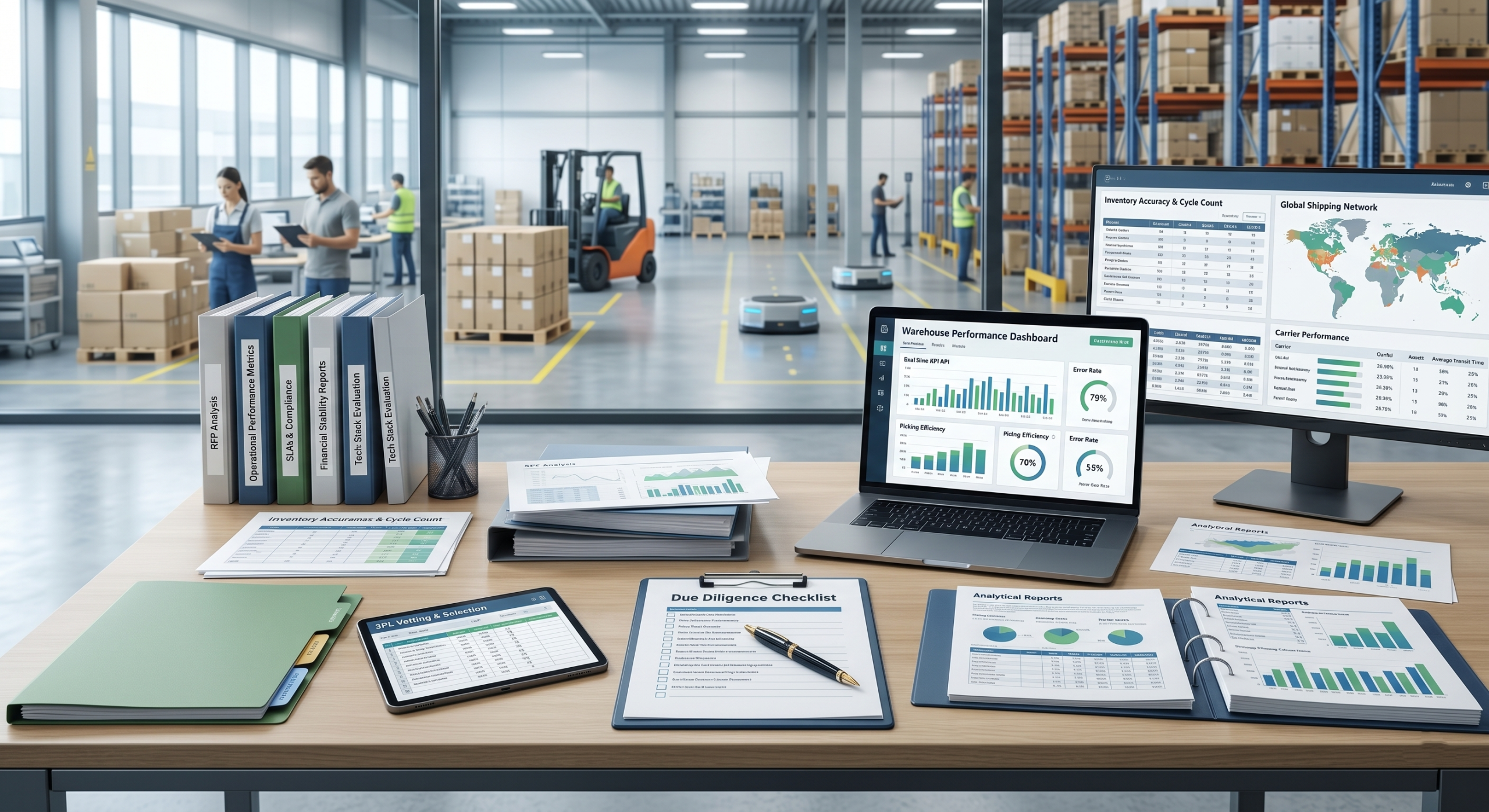
A logistics failure is rarely just an “operational glitch”; it is a brand-damaging event. When inventory is mismanaged or a shipment arrives late, the customer does not blame the warehouse; they blame the retailer. Poor logistics partnerships manifest in tangible losses: damaged products, slow delivery speeds, and spiraling shipping costs. These inefficiencies create a “hidden tax” on your growth, directly eating into your net margins.
This is why the cheapest rate sheet is rarely the safest choice. A low pick fee can look attractive until you account for mis-picks, delayed receiving, storage creep, hidden shipping markups, and the support burden that follows. Launch Fulfillment’s guide to 3PL pricing models can help brands compare proposals based on total cost, not just the most tempting line item.
Shifting the Mindset: From “Vendor” to “Strategic Partner”
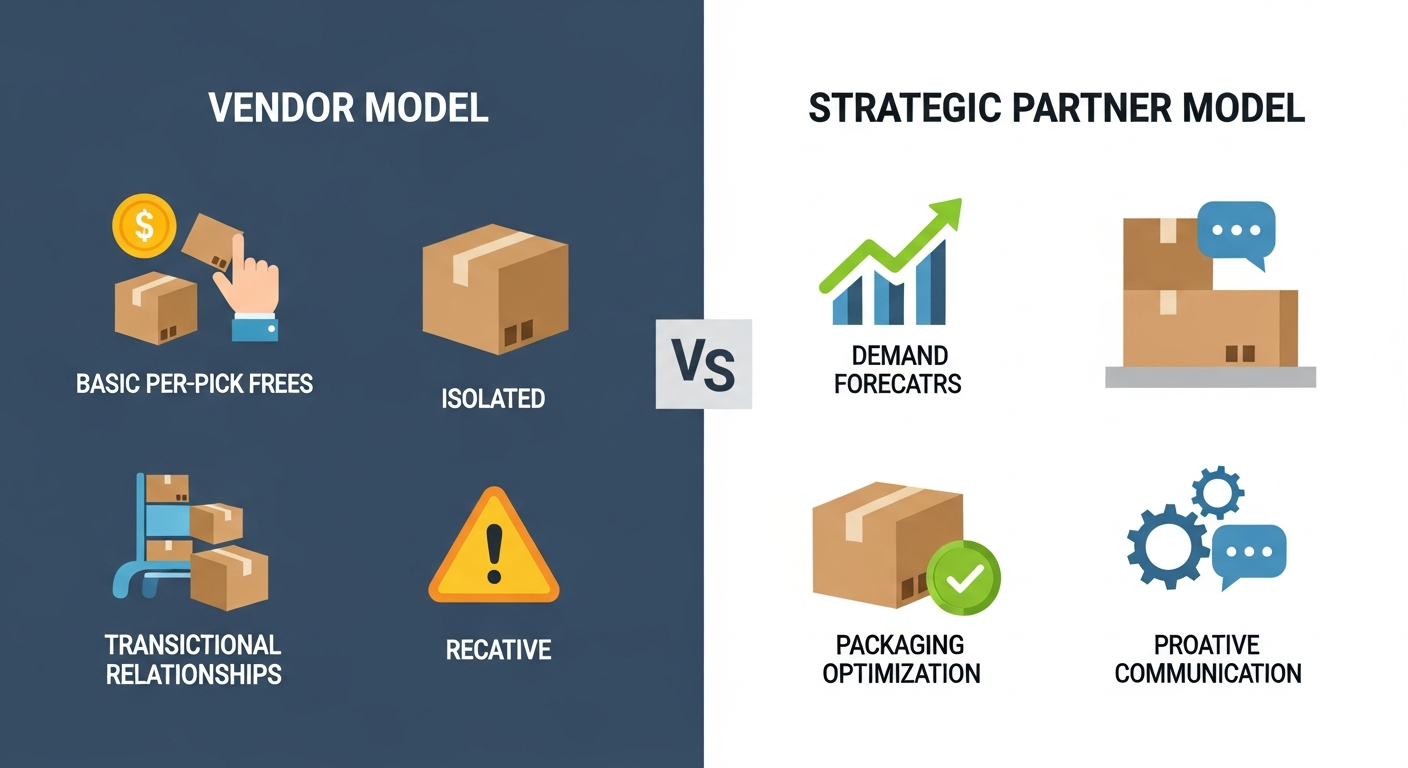
The difference between a vendor and a strategic partner lies in proactive collaboration, forecasting, and optimization.
Move beyond viewing 3PLs as mere vendors who charge per-pick fees. A strategic partner understands your demand forecasting, collaborates on packaging optimization, and proactively communicates potential bottlenecks before they happen. Evaluating a 3PL requires looking at your operations through the lens of long-term partnership potential, ensuring their infrastructure and culture align with your growth trajectory.
That is the mindset behind Launch Fulfillment’s 3PL partner advantage: fulfillment should support growth, not become the thing your team has to keep rescuing every week.
Choosing a 3PL? Ask Better Questions First.
Launch Fulfillment helps ecommerce brands evaluate fulfillment partners with clarity around pricing, technology, inventory accuracy, and scalability, so you do not sign a contract that creates problems later.
Vetting the Foundation: Financial Health and Business Stability
Financial Vetting: Is Your 3PL Provider Growing or Struggling?
A struggling provider is prone to cutting corners in labor, maintenance, and technology. Before signing, request documentation on their financial health if they are a private entity, or review their annual reports if public. High churn rates among their own clients are a major red flag, often indicating systemic service failures that could eventually jeopardize your inventory.
Ask how long they have served brands in your category, how they staff during demand swings, and whether their growth is backed by durable operations. A good provider should be able to explain their capacity, process discipline, and service model without hiding behind vague “we can handle anything” energy. That energy is how you end up with inventory in limbo and a customer support inbox performing Shakespearean tragedy.
Client Concentration: Who Are Their Biggest Customers?
A 3PL that relies on one or two massive enterprise clients may view your smaller, growing brand as a low priority. During peak seasons, that provider will prioritize their biggest accounts, leaving your shipments stranded in the warehouse. Ensure your brand is a “right-fit” customer for their specific scale.
This is especially important for brands moving from early-stage fulfillment into structured ecommerce fulfillment services. You want a partner that understands your volume today and can support the version of your brand you are building toward.
Longevity and Industry Experience: Beyond the Marketing Pitch
Years in business matter, but specific industry experience matters more. Have they handled your specific category of products? For example, temperature-sensitive items or high-value electronics require vastly different security and handling protocols than apparel. Verify their track record with brands of your size and product profile to ensure they have the expertise to manage your inventory levels without unnecessary loss.
If your category involves supplements, beauty, subscription boxes, or specialized handling, evaluate whether the provider has experience with fulfillment services by industry instead of assuming all e-commerce categories behave the same in the warehouse.
Operational Mastery: Assessing Capacity and Service Level Agreements (SLAs)
Scaling for Peak Season: Handling Black Friday and Cyber Monday Surges
Peak season exposes every weakness in a fulfillment operation. Ask directly: “How do you source and train your labor force for Black Friday?” If they rely exclusively on unvetted temp agencies, your accuracy and turnaround times will suffer. A reliable 3PL partner uses a core team of permanent staff supplemented by a scalable, trained labor pool to handle spikes in demand.
Peak readiness should also include inventory forecasting, receiving cutoffs, carrier pickup schedules, packaging availability, and escalation paths. The National Retail Federation regularly tracks seasonal retail activity and shopping behavior, making its holiday data and trends useful context when planning fulfillment capacity around demand surges.
Defining “Accuracy”: Order Fulfillment and Inventory Accuracy Standards
Accuracy is a vanity metric unless it is clearly defined and financially backed by your SLA. What is their acceptable inventory shrinkage percentage? Does the contract stipulate financial penalties for mis-picks or late shipments? Vague performance guarantees are useless. Demand specific, measurable thresholds such as 99.8% order accuracy with clear remedies for failure.
Launch Fulfillment’s order fulfillment resources can help brands understand the operational flow behind receiving, picking, packing, shipping, and returns, so SLA discussions are tied to real warehouse activity instead of pretty dashboard numbers.
Labor Management: How They Source and Train Warehouse Staff
High labor turnover is the enemy of efficiency. Ask about their training protocols and management style. A 3PL that invests in its warehouse floor employees experiences fewer inventory errors and a higher quality of packaging. A disorganized, high-turnover warehouse is a liability that will inevitably manifest as damaged goods for your customer.
Ask whether new employees are trained by function, product type, software workflow, safety protocol, and quality standard. OSHA’s warehousing safety resources are a useful baseline reminder that warehouse operations require structured safety and process controls, not just bodies on the floor.
Value-Added Services: Capacity for Kitting, Customization, and Special Handling
As your brand grows, so does your need for value-added services like kitting, custom gift messaging, or specific branding on packaging. Can your provider pivot when your marketing strategy changes? If they are unable to adapt to your evolving packaging needs, your fulfillment speed will stall, and you will be forced to move to a more capable provider prematurely.
For brands that run subscription boxes, influencer campaigns, bundles, or promotional kits, evaluate whether the provider offers scalable kitting and assembly services and whether those workflows are documented before you sign.
Technology and Integration: Ensuring Real-Time Visibility
Integrated Tech Stacks: API Support for Shopify, WooCommerce, and Marketplaces
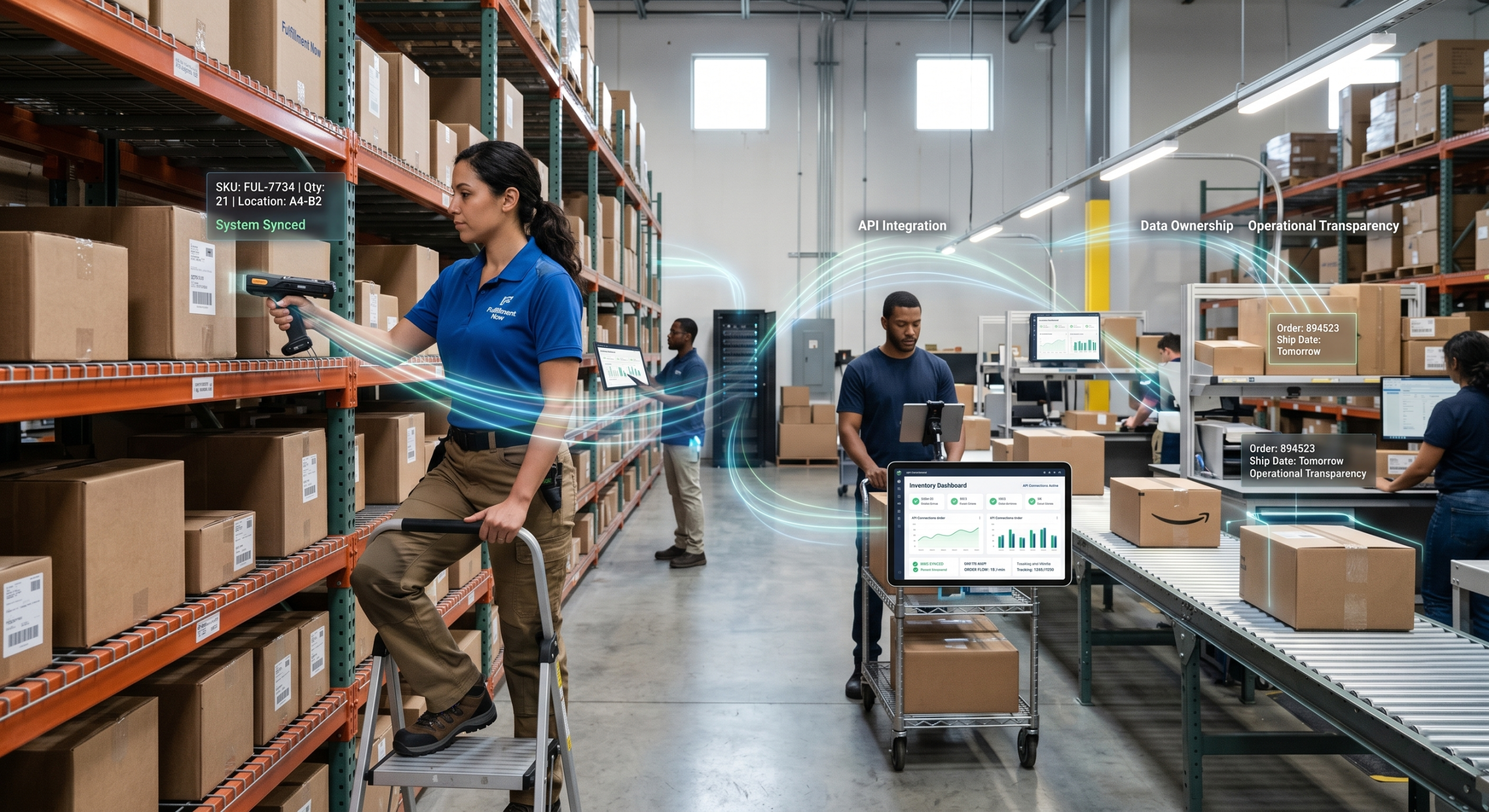
Your tech stack must talk to theirs. A seamless integration with your e-commerce platform is non-negotiable. Ensure they support robust API connections to your primary sales channels, allowing for real-time order flow and shipping updates. If their system requires manual uploads or batch processing, you are already behind the curve.
Shopify explains that webhooks allow apps to subscribe to events and receive updates, which is exactly the kind of real-time data movement that ecommerce brands need between their storefront and fulfillment partner. Launch Fulfillment’s fulfillment and 3PL warehousing approach is built around connecting technology, inventory, and execution rather than treating them as separate problems.
Real-Time Inventory Visibility and Data Ownership
The most critical clause in your contract is data ownership. Never sign an agreement that allows the 3PL to claim ownership of your historical shipping data, inventory records, or customer trends. This data is the intellectual property of your brand. You must ensure you have full, exportable access to this information at all times, especially if you ever need to transition to a different provider.
This is also a risk management issue. NIST describes cybersecurity supply chain risk management as identifying, assessing, and mitigating risks across interconnected technology and operational supply chains, which is a helpful lens for evaluating how a 3PL protects systems, data, and vendor dependencies. NIST’s C-SCRM guidance reinforces why third-party technology risk belongs in the vetting process.
Warehouse Management System (WMS) vs. Your Order Management System (OMS)
Understand the division of labor between your systems. Your OMS should be the “source of truth” for orders, while the 3PL’s WMS handles the execution. If their WMS is antiquated or lacks robust reporting features, you will spend your time chasing tracking updates rather than growing your business.
Ask how orders flow from your ecommerce platform into the warehouse, when inventory updates are sent back, how exceptions are flagged, and what reporting you can export. Your inventory management process is only as reliable as the data moving between systems.
Radio Frequency (RF) Scanning and Automation Infrastructure
Modern fulfillment relies on automation. If a 3PL still uses manual paper-based picking, they are operating in the past. Ensure they use RF scanning or similar barcode technology to maintain inventory accuracy. Automated systems provide the real-time tracking your customers expect, and they are essential for preventing the “lost in the warehouse” scenarios that plague manual operations.
Product identification standards matter here. GS1 explains that GTINs can uniquely identify trade items that are priced, ordered, or invoiced in the supply chain, which supports cleaner product data, barcode logic, and warehouse execution. GS1’s GTIN guidance is a useful reference when evaluating SKU, barcode, and product identification practices.
The Pricing Deep Dive: Uncovering Hidden Fees and Chargebacks
Understanding the Pricing Structure: Pick and Pack Fees vs. Receiving Fees
Pricing models vary wildly. Some 3PLs offer “all-in” pricing, while others itemize every individual action. Be wary of complex fee structures that hide the true cost of fulfillment. Ensure you understand the nuance between receiving fees (inbound freight processing) and pick-and-pack fees (outbound fulfillment). A low pick fee often hides excessive account management fees or inflated outbound shipping rates.
Before comparing proposals, review the e-commerce fulfillment pricing and ask each provider for a sample invoice. A mock invoice will reveal whether the pricing model is clear enough to manage month after month.
Managing Shipping Costs: Dimensional Weight and Carrier Partner Rates
Shipping is typically your largest line item. Does your 3PL pass on their negotiated carrier discounts, or do they mark them up for profit? If they are not transparent about carrier rates, they may be using shipping to subsidize their low service fees. Always verify that you are paying the actual cost of delivery, optimized by their carrier relationships.
Dimensional weight can turn “cheap fulfillment” into expensive delivery very quickly. Launch Fulfillment’s dimensional weight calculator FAQ can help brands understand how package size influences shipping costs before the first invoice lands.
Need Clarity on 3PL Pricing Before You Sign?
Launch Fulfillment helps ecommerce brands understand fulfillment pricing, shipping costs, storage fees, and value-added service charges before they commit to a provider.
The Fine Print on Storage Fees: Long-Term vs. Peak Season Rates
Storage fees can destroy your margins if you are holding excess inventory. Watch for “long-term” storage surcharges that escalate unexpectedly. Negotiate clear, transparent rates for off-peak versus peak seasons so you can forecast your costs based on your expected inventory turnover.
This is where inventory discipline becomes a pricing strategy. If you overstock, move slowly, or fail to forecast demand, storage fees can quietly punish your growth. A strong provider should help you identify slow-moving inventory before it becomes expensive dead weight.
Audit Readiness: Transparency in Invoicing and Billing Disputes
When an invoice arrives, can you easily audit the charges against your own sales data? If a 3PL’s billing is opaque, you are at risk of being charged for services that weren’t rendered. Insist on a billing structure that provides itemized detail for every pick, box, and shipping label.
Ask how disputes are submitted, how quickly credits are issued, and what data is required to verify charges. In a strong partnership, billing should not require forensic accounting and a second cup of coffee strong enough to see through time.
Geographic Strategy: Warehouse Locations and Shipping Times
Port-Centric Locations: Proximity to the Major Hubs
Proximity to ports or major distribution hubs dramatically reduces transit times and drayage costs. If your inventory originates from Asia, a 3PL with a location near a major coastal port will save you time and money. Conversely, if your customers are distributed nationally, you may need a centralized location to ensure the “last mile” is optimized.
Warehouse geography also affects shipping zones. If your origin point is too far from customer demand, you may pay more in delivery costs even if fulfillment fees look competitive.
Regional vs. National Distribution: Reducing the “First Mile” and Last Mile Costs
Your distribution strategy should balance the cost of moving goods into the warehouse with the cost of getting them to your customer. Using one massive warehouse may simplify management, but increase last-mile costs. A regional distribution strategy utilizing multiple hubs can drastically improve delivery speed but adds complexity. Evaluate these trade-offs based on where your customer concentration actually lies.
If you are comparing regional and national approaches, Launch Fulfillment’s ecommerce shipping services and solutions page can help frame how shipping speed, carrier mix, and fulfillment footprint work together.
International Shipments: Handling Bonded Warehouses and International Shipping
If you have global ambitions, ensure your 3PL is equipped to handle the complexities of customs, duties, and international shipping regulations. A provider that lacks experience with bonded warehouses or international documentation will become a major bottleneck as you attempt to scale into new markets.
For international growth, ask who owns documentation, how duties are handled, which carriers are supported, and whether customer support has visibility into cross-border exceptions. “We ship internationally” is not the same as “we can scale international fulfillment without turning your CX team into a customs help desk.”
Quality Control and Risk Management
Shrinkage Allowance: What is an Acceptable Level of Inventory Loss?
Even the best 3PLs experience some loss. However, you must define the “acceptable” threshold clearly. If their loss rate exceeds that number, who pays for the inventory? The contract must define your protection in the event of theft, damage, or gross mismanagement within the warehouse.
Ask for shrinkage thresholds, reimbursement terms, inventory cycle count cadence, and escalation procedures. Launch Fulfillment’s warehousing and fulfillment services are built around operational visibility because inventory trust is the foundation of every successful fulfillment relationship.
Security and Facility Safety: From Security Cameras to Cyber Security
Security is two-fold: physical and digital. Is their warehouse secured with surveillance? What are their access protocols? Just as importantly, how do they protect your digital data from breaches? A security incident at your 3PL is a security incident for your entire brand. Perform due diligence on their cybersecurity measures just as you would for their physical facility.
The FTC’s data security guidance emphasizes that companies should safeguard sensitive information, which is relevant when a 3PL touches customer, order, inventory, and shipping data. Physical controls matter, but so do user access, breach response, vendor controls, and system permissions.
Find a 3PL Built for More Than Pick and Pack
From real-time inventory visibility to transparent pricing and scalable operations, Launch Fulfillment helps brands choose fulfillment systems that support growth instead of slowing it down.
Final Thoughts
Choosing a 3PL is not about finding the lowest “pick and pack” fee; it is about finding a scalable foundation for your brand’s future. By auditing their financial stability, ensuring data ownership, and demanding transparency in their fee structure, you protect your margins and your reputation. Remember that the “hidden fees” are where most partnerships fail, and the quality of their technology is where most brands stall.
As you finalize your selection, prioritize communication and alignment. Use your discovery process to identify partners who treat your inventory with as much care as you do. When you move forward, ensure the “Breakup Clause” is clearly written, not because you plan to leave, but because you must retain the right to move your data and your goods if the partnership fails to meet your growth needs. A strong, transparent 3PL contract is your greatest insurance policy, transforming logistics from a cost center into a core competitive advantage. Approach these negotiations with skepticism, focus on the details, and secure a partner that acts as an extension of your own vision.
If you are ready to evaluate a fulfillment partner with clearer pricing, stronger technology, and a growth-focused operating model, contact Launch Fulfillment to start the conversation.
Related Posts
FAQ: Questions To Ask A 3PL
What are the most important questions to ask a 3PL before signing a contract?
Some of the most important questions to ask a 3PL include how they handle inventory accuracy, shipping times, technology integrations, returns management, pricing transparency, and peak-season scaling. Brands should also ask about hidden fees, service-level agreements (SLAs), and warehouse locations before committing to a fulfillment partner.
How do you evaluate a 3PL provider?
To evaluate a 3PL provider, brands should review operational performance, pricing structure, technology capabilities, communication processes, warehouse network, and industry experience. A strong 3PL should support both current order volume and long-term ecommerce growth without creating operational bottlenecks.
What hidden fees should brands watch for in a 3PL contract?
Common hidden fees include storage overages, dimensional weight markups, account management fees, integration costs, returns processing charges, pallet fees, and peak-season surcharges. Reviewing a sample invoice can help uncover costs that are not obvious in the initial proposal.
Why is technology important when choosing a 3PL?
Technology is critical because ecommerce fulfillment depends on real-time inventory visibility, accurate order syncing, shipping updates, and reporting transparency. A modern 3PL should integrate seamlessly with platforms like Shopify, WooCommerce, Amazon, and major warehouse management systems.
What service levels should a 3PL guarantee?
A reliable 3PL should clearly define order accuracy rates, receiving timelines, shipping cutoffs, inventory shrinkage allowances, and turnaround expectations in a written SLA. These performance standards help protect customer experience and create accountability as order volume grows.
