
Why Your Growing Ecommerce Brand Needs a Strategic 3PL Partner
Choosing the right 3PL for ecommerce is one of the most important decisions a growing brand can make. The ecommerce landscape is dynamic, fiercely competitive, and moving fast. As your online brand grows, the complexity of managing inventory, fulfillment, and transportation in-house can shift from “busy but manageable” to “why is the warehouse suddenly on fire, metaphorically speaking?” For many brands, what starts as a practical DIY setup becomes a major operational bottleneck that drags on margin, customer experience, and growth.
That is exactly where a strategic 3PL partner becomes more than a vendor. The right partner acts as an extension of your team, helping you improve speed, accuracy, visibility, and scalability while freeing your internal team to focus on growth. At Launch Fulfillment, that means combining warehousing, order fulfillment, shipping support, returns management, and ecommerce-first operational strategy in one place.
Online retail keeps expanding, and the operational pressure on brands keeps rising with it. According to the U.S. Census Bureau, ecommerce represented 16.6% of total U.S. retail sales in Q4 2025, reinforcing the need for scalable logistics systems as brands grow. External Reference: U.S. Census Bureau Quarterly Retail E-Commerce Sales
As order volume grows, so do customer expectations. Faster shipping, tighter inventory accuracy, seamless returns, cleaner tracking data, and better communication are not “nice to have” anymore. They are the baseline. That is why many growing brands move from patchwork internal fulfillment to a more durable ecommerce fulfillment services model built for scale.
Navigating the 3PL landscape can feel overwhelming. Service models vary, technology stacks vary, pricing structures vary, and not every provider is built for the same types of products or growth stages. This guide is designed to simplify the process and help you identify the right partner for your business, whether you are shipping beauty, wellness, supplements, subscription boxes, or another fast-moving ecommerce product category supported by Launch Fulfillment’s industry solutions.
The Fulfillment Fog: Challenges of Scaling In-House Logistics
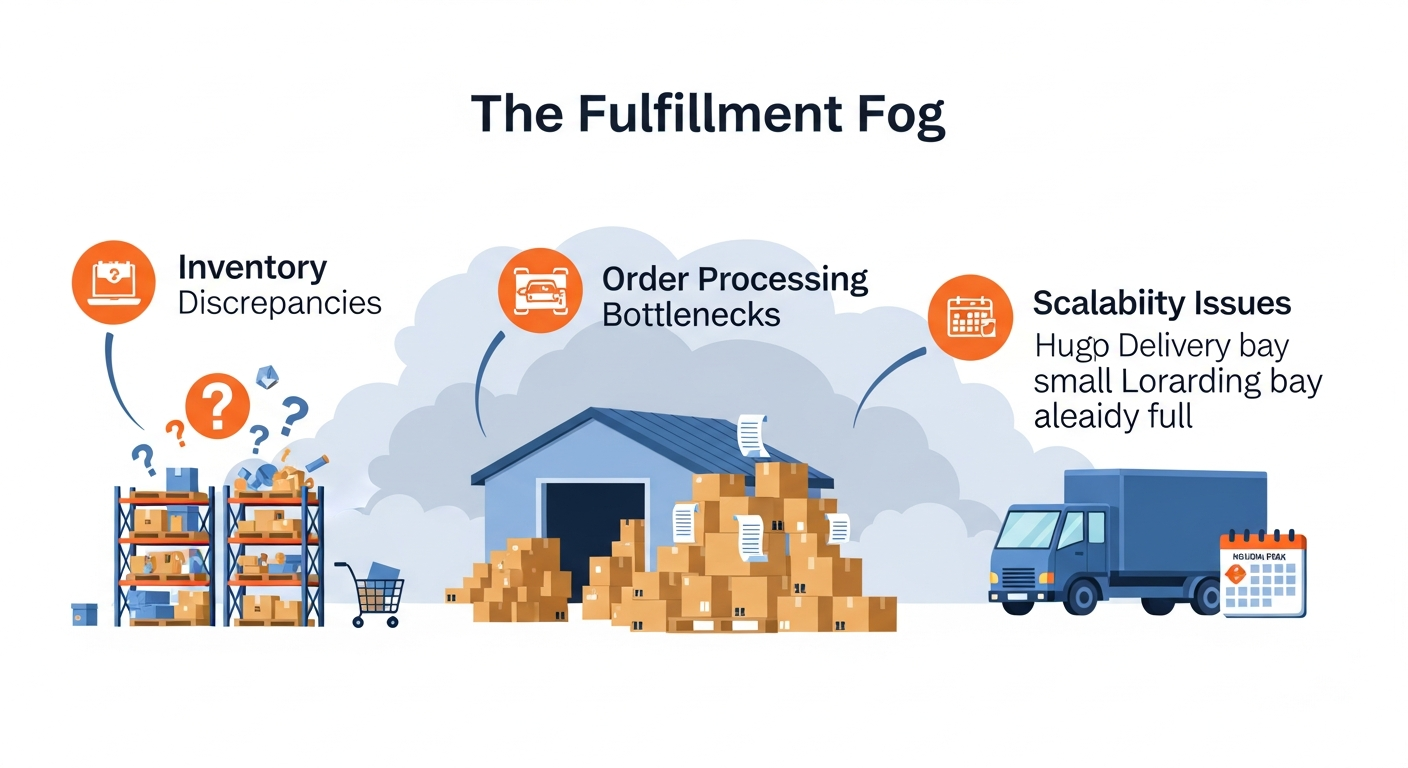
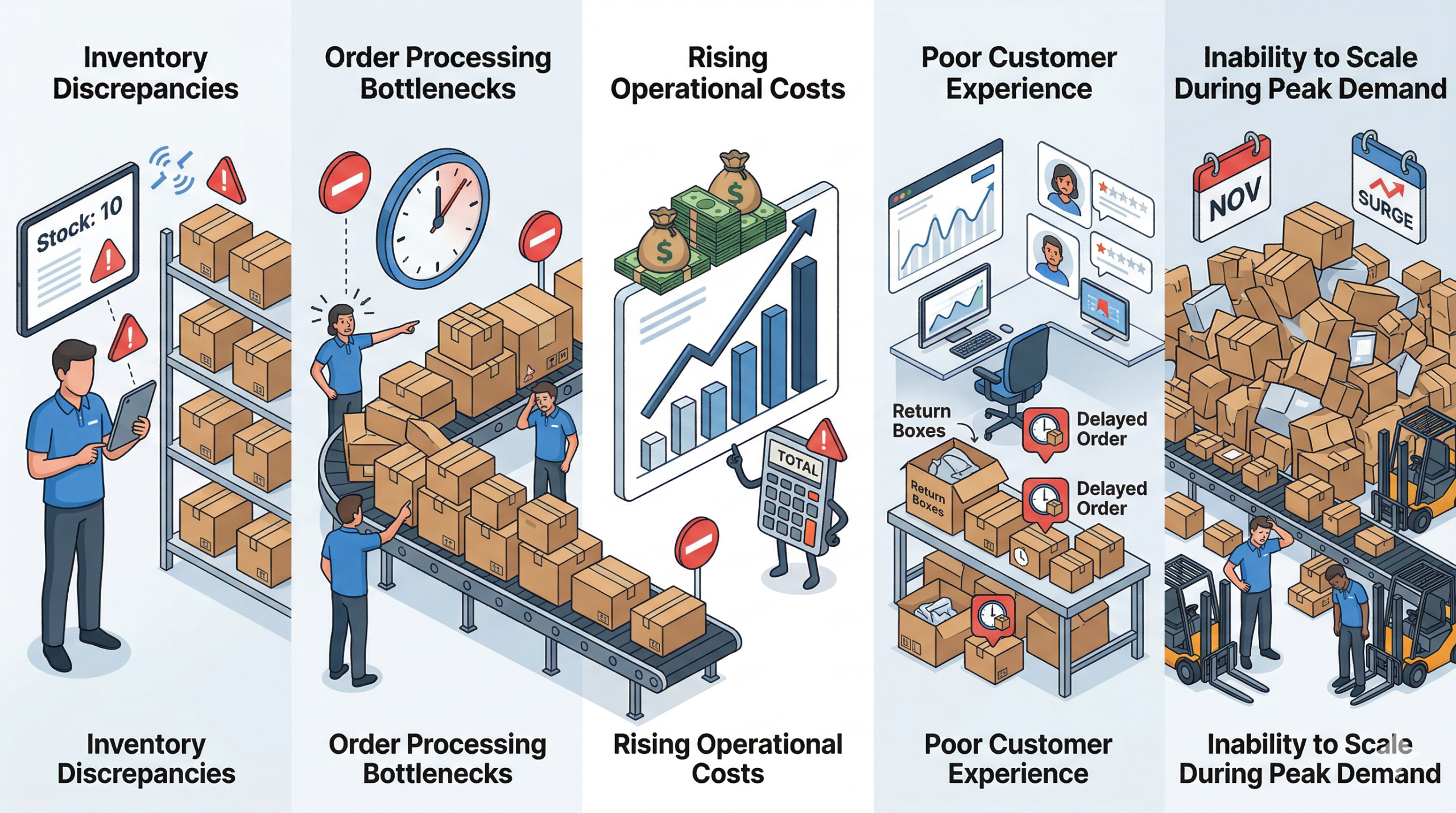
Scaling in-house logistics often creates a kind of fulfillment fog. Inventory errors start appearing more often. Order processing slows down. Team members get pulled away from strategic work to solve operational issues. Peak season stops feeling exciting and starts feeling like an ambush.
As ecommerce brands scale, internal fulfillment frequently becomes one of the first systems to strain under growth. A small team and limited warehouse space may work in the early stages, but increased order volume brings more complexity in receiving, storage, inventory tracking, picking, packing, shipping, and returns. If those systems do not mature at the same pace as demand, the result is usually friction everywhere.
Inventory Discrepancies
Manual tracking and outdated processes can lead to inaccurate inventory counts, which creates stockouts, overselling, delayed orders, and purchasing mistakes. Brands that want more control over stock movement should think carefully about how inventory management connects to forecasting, replenishment, warehouse processes, and fulfillment performance.
Inventory accuracy is not just an operations metric. It shapes customer trust, ad efficiency, and cash flow. When your website says an item is available and it is not, the damage is larger than a single order. It affects the entire buying experience. For a deeper look at the role inventory plays in scale, see what inventory management is and why it matters.
Order Processing Bottlenecks
As order volume increases, manual pick-pack-ship workflows become slower and more error-prone. Orders back up, same-day shipping becomes harder to maintain, and customer support starts fielding questions that should never have existed in the first place. A more structured how fulfillment works model helps reduce those breakdowns by standardizing processes across receiving, storage, picking, packing, and outbound shipping.
Scalability Issues
Many in-house operations are built for average demand, not peak demand. That works until a product launch, holiday surge, influencer mention, or wholesale push lands all at once. The result is overworked staff, missed SLAs, late orders, and preventable mistakes. A specialized fulfillment services partner gives brands access to warehouse space, labor flexibility, and process depth that are difficult to build internally without major overhead.
Rising Operational Costs
Warehouse leases, labor, software, supplies, carrier costs, management overhead, and equipment expenses all rise as your operation grows. The issue is not just cost. It is cost without efficiency. If your operation becomes more expensive but not measurably better, the economics start working against you. That is why many brands benchmark their current costs against ecommerce fulfillment pricing and newer 3PL pricing models before deciding whether to keep fulfillment in-house.
Limited Logistics Expertise
You may know your product category inside and out. That does not automatically mean your team should also be responsible for warehouse optimization, shipping analytics, reverse logistics, inventory planning, platform integrations, compliance workflows, and international expansion. Those are separate disciplines, and they matter more as your brand scales. Working with a strategic 3PL partner lets you tap into that expertise sooner.
Customer Experience Suffers
Late deliveries, incorrect items, poor packaging, and difficult returns are customer experience problems disguised as logistics problems. Returns are especially important. NRF’s 2025 Retail Returns Landscape notes how central returns have become to the retail experience. External Reference: National Retail Federation 2025 Retail Returns Landscape
A strong logistics operation does more than move boxes. It protects repeat purchase behavior, reviews, retention, and brand trust.
Outgrowing your in-house fulfillment?
Inventory errors, slow shipping, and operational chaos don’t scale. Partner with a 3PL built for growing ecommerce brands.
What Is a 3PL and Why It Matters for Growth?
A third-party logistics provider, or 3PL, is a company that handles key logistics functions on behalf of a brand. Those services typically include warehousing, inventory control, order fulfillment, shipping coordination, and returns processing. In simple terms, a 3PL manages the operational side of getting products from your business to your customers.
For growing brands, that matters because fulfillment is no longer a back-office function. It directly affects margin, conversion, retention, and scalability. Outsourcing to a capable 3PL provider allows brands to move faster without forcing internal teams to become warehouse operators, carrier negotiators, and integration specialists overnight.
A 3PL can support growth in several ways:
- It gives you access to scalable infrastructure.
- It improves process consistency.
- It often reduces operational inefficiencies.
- It helps support faster shipping and better delivery performance.
- It creates more internal bandwidth for marketing, product, and customer acquisition.
This is especially true for ecommerce brands that need specialized support such as subscription box fulfillment, custom packaging, multi-channel fulfillment, or category-specific handling requirements.
Beyond a Vendor: Finding a Strategic Partner for Your DTC Brand
The best 3PL relationships are not transactional. They are collaborative. The provider does not just process orders. They help you solve operational problems, improve visibility, support growth planning, and build a better post-purchase experience.
That kind of partnership starts with alignment.
Cultural Fit and Communication
Your fulfillment partner should communicate clearly, move quickly, and understand the difference between a minor warehouse issue and a customer-facing brand risk. That is part of why brands often look beyond a simple service menu and evaluate who they would actually be working with. Launch Fulfillment’s partner advantage page reflects that positioning: a 3PL relationship should feel like strategic support, not ticket-based survival.
Proactive Problem Solving
A reactive 3PL fixes what breaks. A strategic one helps prevent it. That includes identifying inventory risks, flagging shipping cost issues, improving order routing, tightening packaging processes, and surfacing reporting that informs better decisions. In other words, they are not just there when something goes wrong. They are there so fewer things go wrong in the first place.
Continuous Improvement
As your business changes, your logistics model should change with it. New products, new channels, new regions, new shipping expectations, and new promotional calendars all require operational adaptability. A partner with strong fulfillment and warehousing processes can help you improve systems over time rather than locking you into a static model.
Category Experience
Not every 3PL is built for every brand. Regulated products, fragile products, bundles, kits, subscription models, and fast-moving consumables all come with different operational demands. If your brand falls into beauty, wellness, supplements, or another ecommerce-heavy vertical, it makes sense to prioritize providers with strong industry-specific fulfillment solutions.
How This Guide Will Help You Make an Informed Decision
This guide gives you a practical framework for choosing the right 3PL partner for a growing ecommerce brand. It is built to help you understand your own operational needs, evaluate providers more clearly, and avoid choosing a partner based on pricing alone.
By the end, you should be able to:
- define your current logistics pain points,
- project future growth needs,
- evaluate core and advanced 3PL capabilities,
- review technology and integrations more intelligently,
- understand pricing structures and total cost,
- assess reputation and support quality,
- and select a partner with stronger long-term fit.
If you are earlier in the process, you may also want to review what order fulfillment is and what makes a great fulfillment center to build a stronger baseline before comparing providers.
Step 1: Define Your Growth Blueprint and Strategic Needs
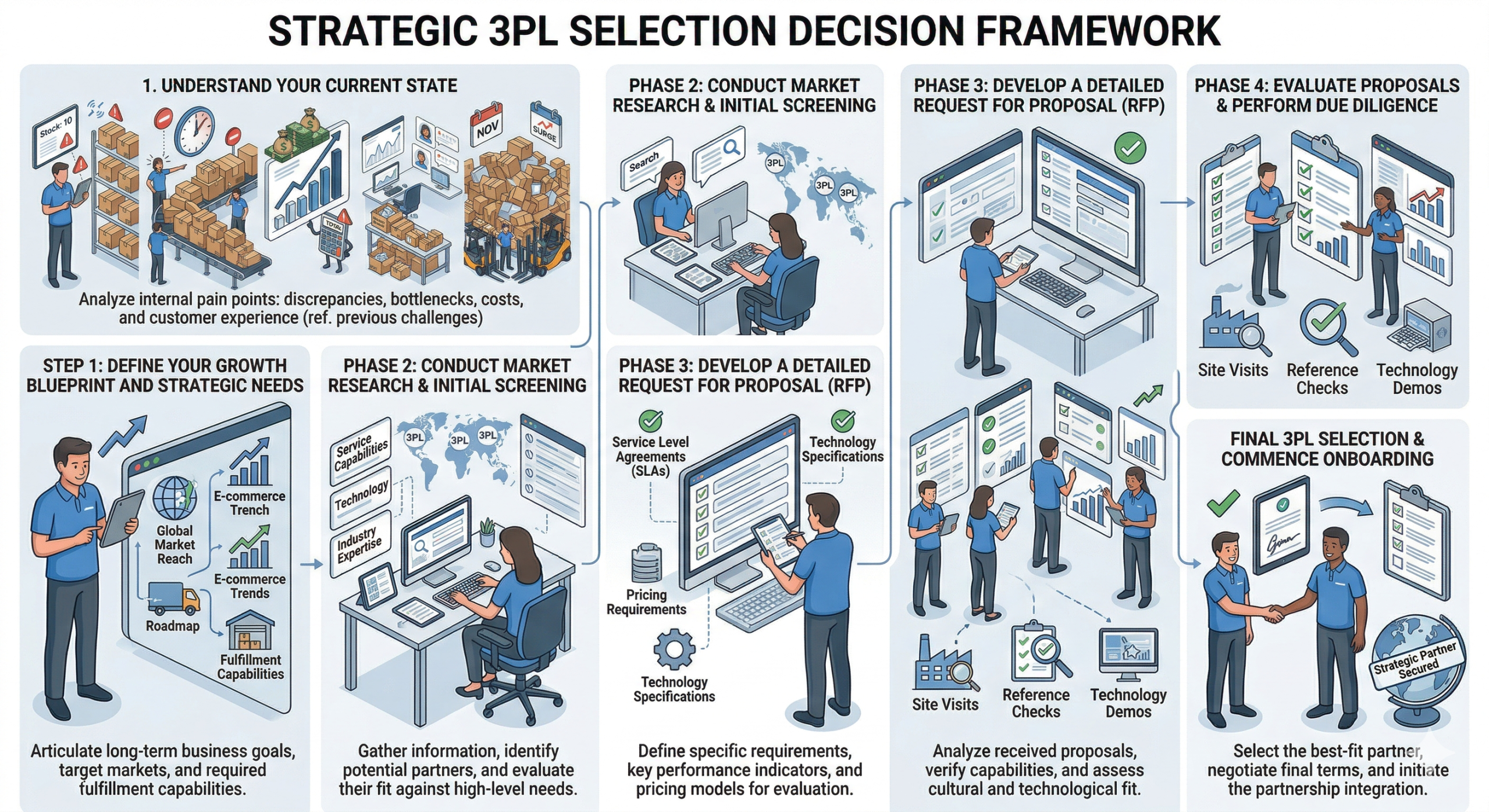
Before you compare providers, define what your business actually needs. This is the step too many brands rush through, and it is where bad-fit partnerships usually begin.
Assess Current Operations and Pain Points
Document how your current operation handles:
- receiving and put-away,
- inventory accuracy,
- order processing speed,
- order accuracy,
- warehouse capacity,
- returns workflows,
- shipping carrier performance,
- and platform integrations.
If you already know the operation is straining, say it plainly. Are errors rising? Are customer complaints increasing? Are you spending too much time troubleshooting fulfillment? Are promotions creating downstream warehouse chaos? A clear starting point makes provider evaluation far more realistic.
For brands with inventory-related pain, inventory management for ecommerce is a useful lens because inventory problems often show up before larger fulfillment issues become impossible to ignore.
Project Future Growth and Scalability Needs
Do not choose a 3PL only for today’s volume. Choose for where the business is going.
Consider:
- projected monthly order growth,
- wholesale or retail expansion,
- international shipping needs,
- product catalog complexity,
- seasonal spikes,
- product launches,
- subscription programs,
- and SKU count changes.
If your product mix includes regulated or complex categories, your future-state planning should reflect that. Operational requirements can change quickly as brands move into new channels or geographies.
For brands considering cross-border growth, U.S. Customs and Border Protection offers a helpful overview of import and export basics. External Reference: CBP Basic Importing and Exporting
Budget and Cost Alignment
You also need a realistic view of logistics costs. That includes current storage costs, fulfillment labor, packaging materials, shipping costs, software expenses, returns processing, and management overhead. Compare those costs to the potential upside of better efficiency, faster delivery, fewer errors, and stronger customer retention.
This is where transparent rate structures matter. Launch Fulfillment’s pricing page and 3PL pricing models guide are useful internal benchmarks for understanding how pricing should be framed: clearly, structurally, and with enough detail to compare proposals without guesswork.
Step 2: Identify Essential 3PL Capabilities and Services
Once your requirements are clear, define what capabilities your 3PL must have.
Core Fulfillment Services
At a minimum, your provider should support:
- receiving and inbound processing,
- inventory storage and control,
- order picking and packing,
- shipping coordination,
- and returns processing.
That sounds basic, but the quality of execution varies a lot. Strong 3PL fulfillment services should combine accuracy, visibility, speed, and process consistency. If a provider cannot explain how they manage those fundamentals, the conversation should get very short, very quickly.
Advanced Logistics Support
Some brands need more than standard order fulfillment. Depending on your growth model, advanced needs may include:
- multi-channel fulfillment,
- retail prep,
- Amazon prep,
- kitting and assembly,
- custom packaging,
- freight coordination,
- international support,
- and reverse logistics.
Launch Fulfillment’s service mix and industry pages suggest a broader capability set than simple warehousing alone, which is what growing brands usually need as complexity increases.
Value-Added Services
Value-added services are often where customer experience gets stronger. Custom inserts, branded packaging, kitting, subscription assembly, and product-specific handling can all improve the unboxing and post-purchase experience while reducing internal operational burden.
For brands shipping recurring kits or curated products, subscription box fulfillment is especially relevant because it blends fulfillment discipline with assembly accuracy and brand presentation.
Step 3: Evaluate Technology and Integration Prowess
A modern 3PL is not just warehouse space. It is warehouse capability plus software, data flow, and operational visibility.
Ecommerce Platform Integration
Your 3PL should integrate cleanly with your ecommerce stack so orders flow automatically, inventory updates stay accurate, and shipping statuses sync back to customers. That reduces manual work, lowers the risk of mistakes, and makes reporting more useful.
Launch Fulfillment’s how it works and 3PL partner advantage pages both emphasize process and data visibility, which are essential when evaluating integration maturity.
Real-Time Visibility
You want dashboards and reporting that help your team answer real operational questions:
- What is in stock?
- What is low?
- What shipped today?
- What is delayed?
- Which carriers are performing?
- What are returns doing?
- Where are errors happening?
If reporting is weak, the partnership will be weaker than it looks on the sales call. Data visibility is what allows brands to improve reorder planning, marketing timing, and customer communication.
Automation and WMS Discipline
Warehouse systems matter because process discipline matters. If a provider has clean receiving, slotting, picking, quality checks, packing controls, and scan-based workflows, your error rate and shipping consistency benefit. If not, “we move fast” usually just means “we apologize fast.”
Need better visibility into your fulfillment?
Real-time inventory, seamless integrations, and accurate order tracking shouldn’t be optional. See how a modern 3PL operates.
Step 4: Assess Scalability, Flexibility, and Network
Your 3PL should be able to grow with you without becoming the next bottleneck.
Capacity for Growth
Ask whether the provider can support not just your current average volume, but your peak volume, launch spikes, and future expansion. The right partner should be able to scale storage, labor, and workflow capacity without requiring a complete process reset every time your sales jump.
Distribution Reach
Warehouse placement affects speed and shipping cost. A provider with strategically located facilities can help reduce transit time and improve customer delivery expectations. Launch Fulfillment’s contact and company location information shows operating footprints in Utah, Kentucky, and the UK, which can support broader fulfillment strategy depending on your business model.
Adaptability
Your needs will change. Your product lineup may expand. Your channel mix may shift. Your shipping profile may evolve. You may need more bundling, stricter quality checks, or more complex returns handling. A strong provider adapts with you rather than forcing you into a one-size-fits-none model.
Step 5: Understand Cost Structures and Financial Transparency
Pricing is where many brands get lured in by a low quote and then discover the invoice has an entire cinematic universe of extra charges.
Understand the Main Cost Buckets
Most 3PL pricing includes some combination of:
- receiving fees,
- storage fees,
- pick and pack fees,
- packaging costs,
- shipping charges,
- returns fees,
- and account or technology costs.
That does not make pricing bad. It makes it important to compare quotes carefully and structurally.
Watch for Hidden Fees
Look for minimums, project fees, peak surcharges, storage aging penalties, packaging add-ons, custom handling costs, and integration charges. If you cannot tell what you will actually pay, you do not really know the cost of the partnership.
This is why a detailed 3PL pricing models breakdown is so useful. It helps brands compare providers based on total operating reality instead of headline pricing alone.
Measure Value, Not Just Cost
The right financial comparison includes more than fees. It also includes:
- faster delivery,
- fewer order errors,
- stronger retention,
- reduced internal overhead,
- clearer reporting,
- lower management burden,
- and better scalability.
Cheaper fulfillment is not better if it creates downstream costs in churn, support volume, refunds, or brand damage.
Step 6: Vet Reputation, Customer Service, and Partnership Potential
A spreadsheet cannot tell you whether a 3PL will be easy to work with when things get messy. People can.
Dedicated Support Matters
Ask whether you will have a real account contact, how quickly issues are handled, and how escalation works. You want support that understands your operation, not generic responses and long delays.
Reputation and Client Fit
Look at client stories, category fit, service positioning, and how the company talks about its role. Launch Fulfillment consistently positions itself as a growth-oriented ecommerce fulfillment partner rather than a commodity warehouse, especially across its homepage, partner, and service pages.
Shared Expectations
The right fit is not just “can they do it?” It is also “do they do it the way your business needs it done?” Process expectations, communication style, reporting detail, packaging quality, and flexibility all matter.
Step 7: Due Diligence and Vendor Selection
Once you narrow the field, move from general conversations to structured evaluation.
Use an RFP Process
A detailed RFP helps you compare providers on the same criteria. Include your order volume, SKU complexity, product type, channel mix, packaging requirements, return profile, integration needs, and growth projections.
Conduct Site Visits if Possible
Seeing operations firsthand can reveal more than a polished proposal ever will. Evaluate organization, cleanliness, workflow discipline, safety, equipment, and how the team works.
Review Contracts and SLAs Closely
Make sure the contract clearly defines scope, fees, timelines, service expectations, reporting, error resolution, and termination clauses. Strong SLAs should address order accuracy, turnaround time, inventory accuracy, and issue resolution.
Consider a Pilot
A pilot program can be the smartest way to test real-world fit before going all in. Proposals are promises. Pilots are evidence.
Step 8: Seamless Onboarding and Ongoing Management
Choosing the provider is only the beginning. The onboarding process determines how quickly the partnership becomes productive.
Build a Clean Onboarding Plan
Onboarding should include:
- inventory data migration,
- platform integration,
- inbound transfer planning,
- packaging instructions,
- routing rules,
- returns setup,
- and communication workflows.
The cleaner the setup, the faster the partnership delivers value.
Monitor KPIs Regularly
Track:
- order accuracy,
- ship time,
- inventory accuracy,
- return turnaround,
- support responsiveness,
- and shipping cost trends.
That data gives both sides a common operating language and makes improvement more objective.
Treat the 3PL Like a Strategic Extension of the Brand
The best results come from collaboration. Share forecasts, campaign calendars, launch timing, packaging changes, and demand shifts early. A good partner can only help plan around what they can see.
Why Launch Fulfillment Fits the Strategic 3PL Model
For ecommerce brands that want more than basic warehousing, Launch Fulfillment positions itself around premium fulfillment support, industry-specific services, operational visibility, and scalable growth support. Across its 3PL fulfillment services, ecommerce fulfillment services, how-it-works, and partner advantage pages, the brand emphasizes the exact qualities growing ecommerce companies tend to need: speed, accuracy, transparency, category alignment, and operational partnership.
If your brand is hitting the point where in-house fulfillment is slowing growth, this is the moment to rethink the model before logistics becomes the reason momentum stalls.
Ready to scale without turning fulfillment into your full-time headache? Contact Launch Fulfillment to discuss your order volume, product requirements, and growth goals with a team built for ecommerce brands that need speed, accuracy, and room to grow.
Related Posts
Outgrowing your current 3PL?
Inventory issues and shipping delays shouldn’t hold your brand back. Work with a fulfillment partner built for scale.
