
Key Takeaways
- DDP vs. DAP is more than a shipping decision. It affects checkout transparency, customer trust, customs responsibility, international returns, and long-term ecommerce growth.
- DDP, or Delivered Duty Paid, creates a smoother customer experience because the seller handles duties, taxes, customs clearance, and delivery to the customer’s door.
- DAP, or Delivered at Place, is simpler for the seller but pushes duties, taxes, and customs responsibilities onto the customer after the package reaches the destination country.
- For DTC ecommerce brands, surprise customs fees can hurt conversion, increase refused deliveries, and damage customer loyalty after the sale.
- DDP usually works best for premium products, B2C ecommerce, high-growth markets, and brands that want international orders to feel like local deliveries.
- DAP may make sense for B2B shipments, wholesale buyers, lower-margin products, or early market testing where the buyer understands the import process.
- The best DDP vs. DAP strategy depends on landed cost visibility, HS codes, tax compliance, customs documentation, international returns, and whether your 3PL can support cross-border fulfillment at scale.
For an ecommerce founder, the difference between DDP and DAP is not merely a logistical preference; it is a fundamental choice between brand loyalty and operational ease. When a customer lands on your site, they expect a seamless experience. If they encounter hidden fees upon delivery, that trust evaporates instantly. Understanding the nuances of these Incoterms is no longer optional; it is a critical requirement for scaling a global brand.
At Launch Fulfillment, we see this decision show up often as ecommerce brands expand beyond domestic shipping. The Incoterm you choose affects checkout transparency, customs expectations, duties and taxes, returns, delivery experience, and whether international buyers feel like they are buying from a polished global brand or taking on a confusing import process alone.
Beyond the Dictionary: Why Your Incoterm Choice Dictates Your Growth
In the world of international trade, Incoterms 2020 define exactly where the seller’s responsibility ends, and the buyer’s begins. Many businesses treat these as back-office formalities, but in reality, they are sophisticated marketing tools. Your choice of shipping term dictates how you price products, how your customers perceive your transparency, and ultimately, whether they return to your store.
For ecommerce brands, this is why international expansion should be connected to a larger ecommerce fulfillment services strategy. Customs, duties, landed cost, inventory placement, shipping zones, returns, and delivery promises should not be handled as separate decisions.
The “Sticker Shock” Problem: How Shipping Terms Impact Conversion
The primary barrier to international expansion is the “surprise cost.” When a customer orders a product and is later slapped with unexpected customs duties or handling fees by a courier, they feel cheated. This is the “Sticker Shock” effect. Statistics show that roughly 70% of international carts are abandoned at the final stage, often because consumers fear or realize that the price at checkout is not the true landed cost. By selecting the right Incoterm, you control the customer journey, ensuring that your branding remains professional and friction-free from click to delivery.
That is especially important for premium categories like supplements, beauty, skincare, apparel, and lifestyle products where the customer experience is part of the purchase. A strong ecommerce shipping strategy should make the final cost as clear as possible before the customer places the order.
Incoterms 2020: A Quick Refresher for Modern Sellers
Incoterms are the International Commercial Terms that govern global shipments. They clarify who bears the risk of loss, who handles customs clearance, and who pays for transport. For ecommerce, the two most relevant terms are Delivered Duty Paid (DDP) and Delivered at Place (DAP). Understanding these allows you to decide whether you want to provide an “all-inclusive” service or shift the burden of international trade compliance onto your customers.
The ICC Academy’s guide to DAP and DDP under Incoterms 2020 is a useful external reference for understanding how these two rules differ. For most DTC ecommerce brands, the practical question is simple: do you want the customer to pay duties at checkout, or after the package arrives in their country?
Expanding Internationally Without Creating Customer Friction?
Cross-border ecommerce requires more than a shipping label. Launch Fulfillment helps growing brands think through inventory placement, fulfillment workflows, shipping strategy, customs friction, and customer experience so international orders feel easier to scale.
Understanding Delivered Duty Paid (DDP): The All-Inclusive Customer Experience
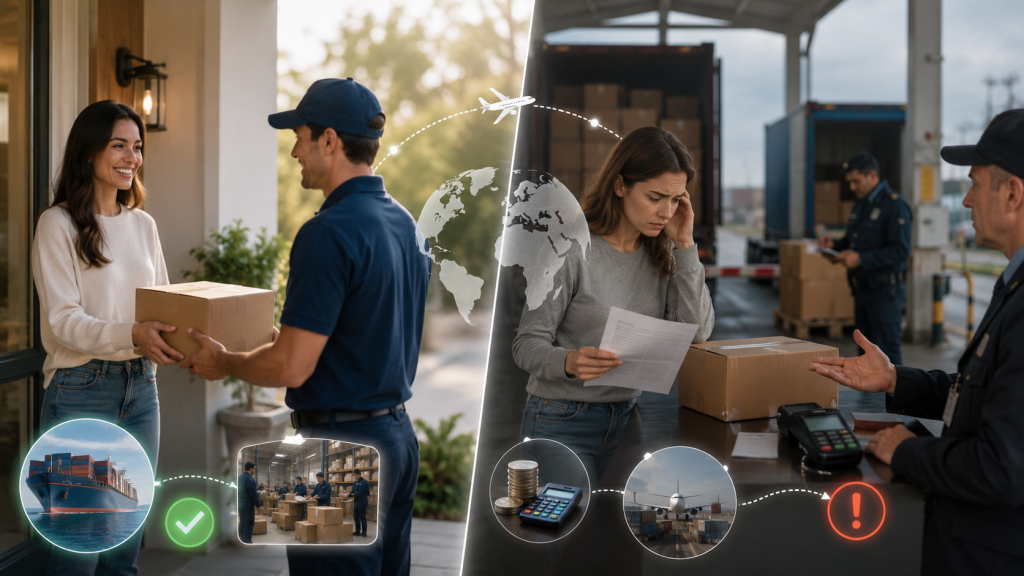
DDP gives international customers a smoother delivery experience, while DAP can create extra customs and duty-payment friction.
DDP is the gold standard for high-end, consumer-facing brands. Under this term, the seller bears almost all responsibilities, including transport, import duties, and customs clearance.
How DDP Works: Seller Responsibilities from Warehouse to Doorstep
Under DDP, the seller assumes full responsibility and covers all costs from the origin warehouse to the customer’s doorstep, including customs and duties.
In a DDP model, the seller takes responsibility for the entire journey. This includes managing international shipping, covering all import duties, and ensuring the product passes through customs clearance without the buyer needing to lift a finger. The seller effectively absorbs the costs or bakes them into the final purchase price, ensuring the package arrives at the customer’s doorstep as if it were a local delivery.
For brands with a strong customer experience promise, DDP pairs well with a fulfillment operation that can support accurate order processing, clean documentation, and reliable shipping. Launch Fulfillment’s 3PL fulfillment services help ecommerce brands connect warehousing, order fulfillment, shipping, returns, and inventory visibility into one scalable workflow.
The Role of the Importer of Record (IOR) in DDP Shipments
Under DDP, the seller acts as or appoints the Importer of Record. This means you, as the brand, are legally responsible for the documentation and the taxes paid to the destination country. This increases your administrative burden but removes every possible hurdle for the customer. Navigating the regulatory landscape as the IOR requires careful attention to detail, as you must comply with the local tax laws of every territory where you ship.
For brands moving into the UK or EU, this may involve tax registrations, customs brokers, EORI numbers, and country-specific import requirements. GOV.UK explains that businesses need an EORI number for customs processes such as making declarations or appointing someone to handle customs on their behalf.
Advantages of DDP: Boosting Customer Lifetime Value (CLV) and Trust
Because DDP provides a frictionless experience, it is a massive driver of conversion. Customers prefer knowing exactly what they are paying upfront. By eliminating the risk of surprise fees, you build significant brand equity. A customer who receives their package without a surprise invoice from a courier is much more likely to become a repeat purchaser, thereby increasing your long-term profit.
This is why DDP is often the better fit for high-value DTC brands that want international customers to experience the same level of service as domestic buyers. The more premium the brand promise, the more damaging a surprise customs bill can be.
Understanding Delivered at Place (DAP): The Operational Simplicity Model
DAP is the “pay-as-you-go” version of international shipping. It is widely used in B2B transactions where the buyer is familiar with the import process.
How DAP Works: Where the Seller’s Responsibility Ends
Under DAP, the seller is responsible for shipping the goods to the customer’s specified location. However, the seller is not responsible for customs clearance, import duties, or local taxes. Once the package arrives at the border, the customer becomes responsible for all customs formalities and payments.
For some B2B or wholesale customers, that structure may be acceptable because the buyer already understands import requirements. For direct-to-consumer ecommerce, it can create friction because the customer may not expect to become the importer in practice.
The “Customer as Importer” Risk: Navigating Customs Formalities
This is the danger zone for DTC brands. If you use DAP, the customer is the one who must interact with customs authorities. If the customer is unaware of these requirements, they may refuse the delivery. A refused shipment results in not just a loss of the sale, but also potential return shipping costs, storage fees, and the headache of re-importing the goods.
This is where clear communication matters. If you use DAP, the checkout, confirmation email, shipping policy, and tracking page should all explain that duties and taxes may be due on delivery. Hiding that detail may produce the initial order, but it can damage the customer relationship after delivery.
Advantages of DAP: Lower Upfront Costs and Simplified Logistics for Sellers
The primary advantage of DAP is simplicity. You do not need to register as an importer in foreign countries, nor do you need to calculate complex duty structures at checkout. For low-margin businesses or markets where tax compliance is prohibitively complex, DAP provides a way to offer international shipping without significant upfront investment in legal or financial infrastructure.
For brands still validating demand in a new market, DAP can be a lower-commitment entry point. The risk is that operational simplicity for the seller can become customer friction for the buyer.
The Conversion vs. Profitability Trade-off
Every ecommerce decision is a balancing act between the cost of operations and the rate of conversion.
Why 70% of International Carts are Abandoned: The DAP “Hidden Fee” Effect
The abandonment rate is largely driven by ambiguity. If you hide the fact that the customer might owe 20% in import duties upon delivery, you are essentially deceiving the buyer. Modern consumers are savvy; they know international goods come with potential taxes. If your checkout does not clearly communicate these, the “hidden fee” effect will drive them to a competitor who does.
Brands should also measure how shipping terms affect customer support. Duties-on-delivery questions, refused parcels, delayed customs clearance, and unexpected fees can all create extra tickets that do not show up in a simple shipping-cost comparison.
Calculating True Landed Cost: Factoring in Duties, Taxes, and Handling Fees
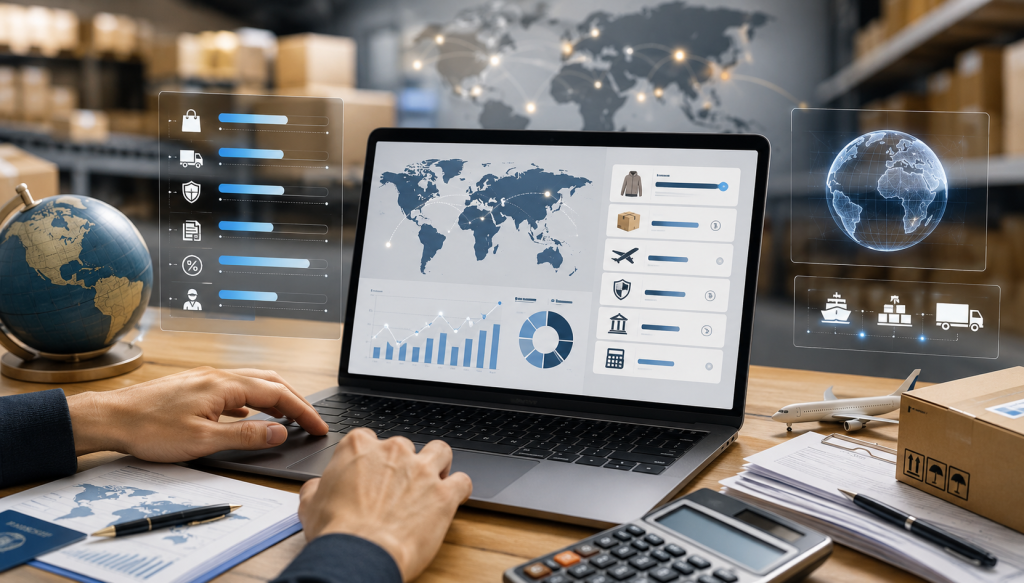
Landed cost visibility helps ecommerce brands show international customers the true cost of delivery before checkout.
The United States International Trade Commission explains that the Harmonized Tariff Schedule sets tariff rates and statistical categories for merchandise imported into the United States. That matters because tariff classification is one of the inputs that can affect landed cost calculations.
Pricing Strategy: Should You Absorb DDP Costs or Pass Them to the Consumer?
You have two choices: bake the duties into the product price or add them as a visible fee at checkout. Baking them into the price increases your margins but makes your products look more expensive than those of your competitors. Displaying them clearly at checkout maintains transparency. Most successful brands choose the latter, offering “Duty-Paid Shipping” as an add-on service.
The right model depends on your category, average order value, target country, return rate, and customer expectations. A brand selling premium skincare, for example, may choose a different DDP pricing strategy than a brand selling low-margin accessories.
Navigating the Compliance Maze: Taxes, Duties, and Regulations
Compliance is the unseen anchor of international trade. If you ignore it, you will eventually face severe penalties or shipments seized at the border.
The Importance of Accurate HS Codes and Customs Tariff Numbers
Every product you sell must have a Harmonized System (HS) code. This universal code tells customs officials exactly what is inside the box and how much duty should be applied. A single error in your HS code can lead to incorrect taxation, delays, or fines.
For ecommerce teams, HS code accuracy should be part of product setup, not a last-minute shipping task. The more SKUs you sell internationally, the more important it becomes to document classifications, descriptions, country of origin, product materials, and compliance notes in a repeatable system.
VAT, IOSS, and EORI: Essential Documentation for European Trade
If you are shipping to Europe, you must understand the Import One-Stop Shop (IOSS) and the Economic Operator Registration and Identification (EORI) number. These systems are designed to simplify the collection of Value Added Tax (VAT) for online sales. Failing to provide these documents will result in your goods being held at customs, leading to frustrated customers and administrative nightmares.
The European Commission explains that VAT ecommerce rules and the One Stop Shop affect the entire ecommerce supply chain, including online sellers, marketplaces, postal operators, couriers, customs authorities, and consumers. If Europe is a core market, this is not optional background knowledge; it is part of your operating model.
Regulatory Liability: Managing Trade Sanctions and Import Restrictions
You are responsible for ensuring that you are not shipping restricted items to sanctioned countries. Always maintain a live list of forbidden goods for each market you enter. Being a global seller means you are subject to the trade laws of both your home country and the destination country.
The U.S. Treasury’s Office of Foreign Assets Control provides a sanctions list search tool that businesses can use as part of a broader screening process. For regulated categories, brands should work with customs, legal, and compliance professionals before opening new international markets.
Need a Smarter Cross-Border Fulfillment Strategy?
DDP and DAP decisions affect checkout conversion, customs expectations, returns, cash flow, and customer trust. Launch Fulfillment helps ecommerce brands think through fulfillment operations, warehouse placement, shipping strategy, and international growth with more confidence.
The Hidden Challenge: Managing International Returns Under DDP vs. DAP
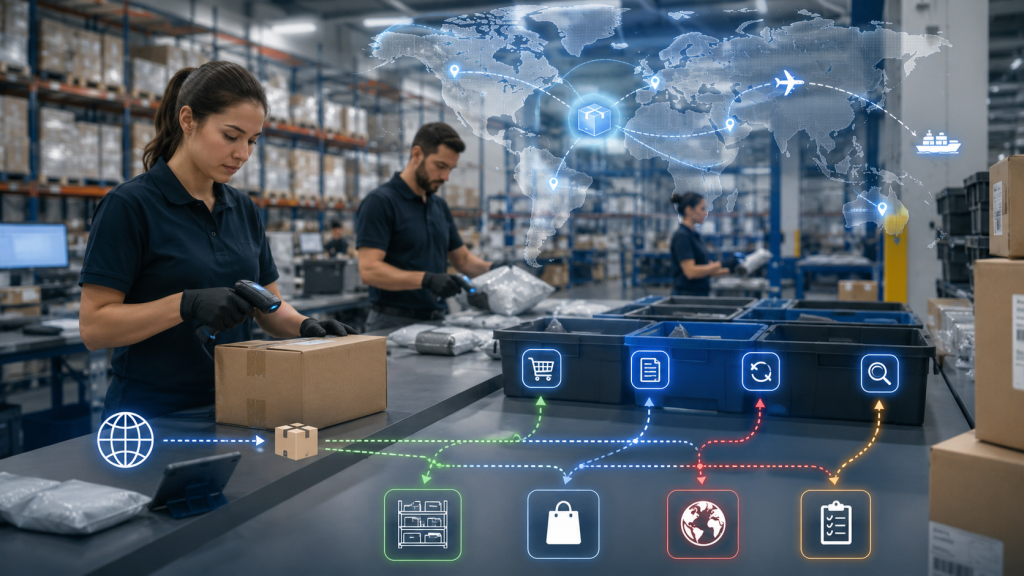
International returns can create extra duty, customs, and shipping costs unless brands plan the right cross-border fulfillment strategy.
The “Double Duty” Trap: Why DDP Returns Can Kill Your Margins
When you ship DDP, you pay the duties to the destination government. If the customer returns the item, that government rarely refunds the duties you paid. Consequently, you have paid duties to send it there, and you may pay return shipping to get it back, all while losing the sale. This “double duty” scenario is why some brands refuse to offer free returns on international DDP shipments.
This is where reverse logistics becomes a major part of the cross-border cost model. International returns should be reviewed before you choose DDP, not after return labels start eating into margin.
Reverse Logistics Strategies: How to Recoup Duties on Returned Goods
The best strategy for returns is to keep the inventory abroad if possible. Utilizing a local 3PL to handle returns allows you to resell the items in the destination market without having to re-import them. If you must ship items back, ensure your internal accounting team is tracking duty-drawback programs where applicable, though these are often difficult to navigate for small businesses.
CBP provides information on duty drawback, but eligibility and documentation can be complex. In practice, many ecommerce brands reduce return friction by placing inventory closer to end customers and using local return processing where possible.
Operational Implementation: Tools and Partnerships
Transitioning from DAP to DDP is a technical, not just a logistical, shift.
Integrating Landed Cost Calculators into Your Ecommerce Checkout
Modern platforms like Shopify or Magento allow you to integrate API-based calculators that determine duties and taxes in real-time. This provides the customer with the final, guaranteed price, which is essential for a premium DDP experience.
That calculator still needs clean product data. HS codes, country of origin, product value, shipping destination, tax rules, and carrier options all need to work together at checkout. If the source data is messy, the customer-facing price will be unreliable.
The Role of Customs Brokers and Freight Forwarders in Streamlining Delivery
Customs brokers are your best friends. They handle the bureaucracy of border crossings, ensuring your cargo does not get stuck in a warehouse. Partnering with a reliable forwarder who understands the nuances of DDP and DAP will save you countless hours of troubleshooting.
U.S. Customs and Border Protection explains that customs brokers are licensed under statutory authority and support import processes. For scaling brands, the right broker can help reduce clearance delays and documentation confusion.
Leveraging 3PLs and Warehouse Automation for Cross-Border Efficiency
By using 3PLs with multiple hubs globally, you can turn a long, risky international shipment into a short, predictable domestic delivery. This is the ultimate way to solve the Incoterm dilemma: don’t ship internationally; store your goods locally.
Launch Fulfillment’s UK fulfilment team gives brands a path to serve UK customers with a more localized fulfillment strategy. For brands importing into the UK, a UK bonded warehouse can also help store imports duty- and VAT-suspended while brands manage cash flow, compliance, and market expansion.
Decision Framework: Which Incoterm Should You Choose?
When to Choose DDP: Luxury Goods, B2C, and High-Growth Markets
If you are selling high-value goods, B2C, or trying to capture market share in a new, competitive country, DDP is mandatory. Your customers expect the brand to handle the logistics. The higher conversion rates and brand trust generated by DDP generally outweigh the increased administrative costs.
Choose DDP when you want to control the experience end to end. It is often the better fit for premium DTC brands, high-repeat-purchase products, subscription models, and markets where customer trust matters more than the simplest seller-side workflow.
When to Choose DAP: Bulk B2B Shipments and Raw Materials
If your business focuses on B2B, wholesale, or shipping low-margin commodities, DAP remains the standard. Your professional buyers are equipped to handle the import process, and they often prefer it because they can manage their own tax accounting more efficiently.
Choose DAP when your buyers understand customs, your margins cannot support duty-paid delivery, or you are testing a new market before investing in local compliance and fulfillment infrastructure.
Final Thoughts
Choosing between DDP and DAP is a strategic decision that shapes the perception of your brand on the global stage. While DDP requires higher operational maturity involving tax compliance, customs documentation, and landed-cost calculation, it rewards the seller with higher conversion rates and superior customer satisfaction. Conversely, DAP offers simplicity but places the burden of compliance on the buyer, which is a significant friction point for modern, convenience-seeking consumers.
To succeed, assess your brand’s maturity, your average order value, and your target customer’s appetite for administrative tasks. If you are a high-growth DTC brand, shift toward DDP. Invest in integrated landed-cost software and partner with 3PLs that understand the intricacies of international trade. By treating Incoterms as a customer experience lever rather than a shipping setting, you will not only reduce cart abandonment but also build a sustainable, scalable international operation. Start small by auditing your current return rates and cross-border margins, then implement a strategy that prioritizes the customer’s ease of purchase over short-term logistical convenience. Your goal is to make every international order feel like a local one.
For growing ecommerce brands, that goal becomes easier when fulfillment, warehousing, customs planning, and customer experience are aligned. Launch Fulfillment helps brands build scalable fulfillment operations across the U.S. and UK so international growth does not have to feel like guesswork.
Make International Orders Feel Local
Whether you are comparing DDP vs DAP, evaluating UK fulfilment, or planning a cross-border warehouse strategy, Launch Fulfillment can help your brand reduce operational friction and deliver a cleaner customer experience.
FAQ: DDP vs DAP
What is DDP vs. DAP?
DDP vs. DAP refers to two different international shipping terms that decide who is responsible for customs duties, import taxes, and clearance. With DDP, the seller pays duties and handles customs before delivery. With DAP, the seller ships the order to the destination, but the customer is responsible for paying duties, taxes, and customs fees before receiving the package.
Is DAP better than DDP?
DAP is not automatically better than DDP. DAP can be easier for the seller because the customer handles duties and import fees, but it can create surprise costs and delivery friction for the buyer. DDP is usually better for ecommerce customer experience because the customer sees the full cost upfront and does not receive a surprise customs bill at delivery.
What is the disadvantage of DDP?
The biggest disadvantage of DDP is that the seller takes on more responsibility. The seller must calculate duties and taxes, manage customs documentation, handle compliance, and often act as or appoint the importer of record. DDP can also create margin pressure if duties, taxes, and return costs are not calculated correctly.
Who pays duty in DAP?
Under DAP, the buyer usually pays import duties, taxes, and customs-related fees when the shipment reaches the destination country. The seller is responsible for getting the goods to the named destination, but the buyer is responsible for customs clearance costs and import charges.
Who pays freight on DAP terms?
Under DAP terms, the seller typically pays the freight cost to deliver the goods to the agreed destination. However, the buyer is responsible for import duties, taxes, customs clearance, and any related fees once the goods arrive in the destination country.
Can DAP cause refused deliveries?
Yes. DAP can lead to refused deliveries when customers are surprised by duties, taxes, or customs fees after checkout. If the customer does not want to pay the charges, the package may be delayed, returned, abandoned, or refused. This can create extra costs for the seller and a poor customer experience.
Which Incoterm is best for ecommerce brands?
For most DTC ecommerce brands, DDP is usually the stronger option because it creates a more transparent checkout and a smoother delivery experience. DAP may work for B2B or wholesale buyers who understand customs processes, but DDP is often better for customer trust, conversion, and repeat purchases in consumer ecommerce.
