

Key Takeaways
- Supplement fulfillment checklist is more than logistics, it’s compliance. FDA regulations, lot tracking, and proper storage must be built into your operations from day one.
- Your product determines your fulfillment strategy. Shelf life, temperature sensitivity, and packaging all impact how products should be stored and shipped.
- Inventory management is critical to profitability. Poor tracking leads to stockouts, expired inventory, and unnecessary capital tied up in excess product.
- Packaging directly affects cost and customer experience. Optimizing packaging reduces dimensional weight while protecting product integrity during transit.
- Order processing speed determines delivery performance. Even the fastest shipping option fails if your internal fulfillment workflow isn’t optimized.
- Shipping strategy should be intentional, not reactive. Carrier selection, shipping zones, and delivery expectations all influence cost and customer satisfaction.
- Scalable fulfillment systems drive long-term growth. Brands that invest in structured processes and the right 3PL partner can grow faster without operational breakdowns.
The dynamic landscape of the Direct-to-Consumer (DTC) supplement market presents both immense opportunity and unique challenges. With the U.S. dietary supplement market reaching $69.3 billion in 2024, driven by steady growth, the demand for high-quality, accessible products has never been higher. Brands that succeed in this space understand that the journey from a promising formula to a satisfied customer is paved with meticulous operational planning.
At Launch Fulfillment, we’ve seen firsthand that fulfillment isn’t just logistics, it’s the backbone of compliance, customer experience, and scalable growth. Whether you’re launching your first SKU or scaling into national distribution, your fulfillment strategy determines how well your brand performs under pressure.
Supplement fulfillment isn’t something you want to guess on.
From compliance to storage to shipping, small mistakes can become expensive fast. The right fulfillment partner helps you get it right from the start.
Fulfillment, in particular, is not merely a logistical step; it’s a critical pillar that underpins regulatory compliance, brand integrity, and customer loyalty. For DTC supplement brands, mastering fulfillment is paramount.
Phase 1: Pre-Fulfillment Foundation
Step 1: Define Your Product’s Fulfillment DNA
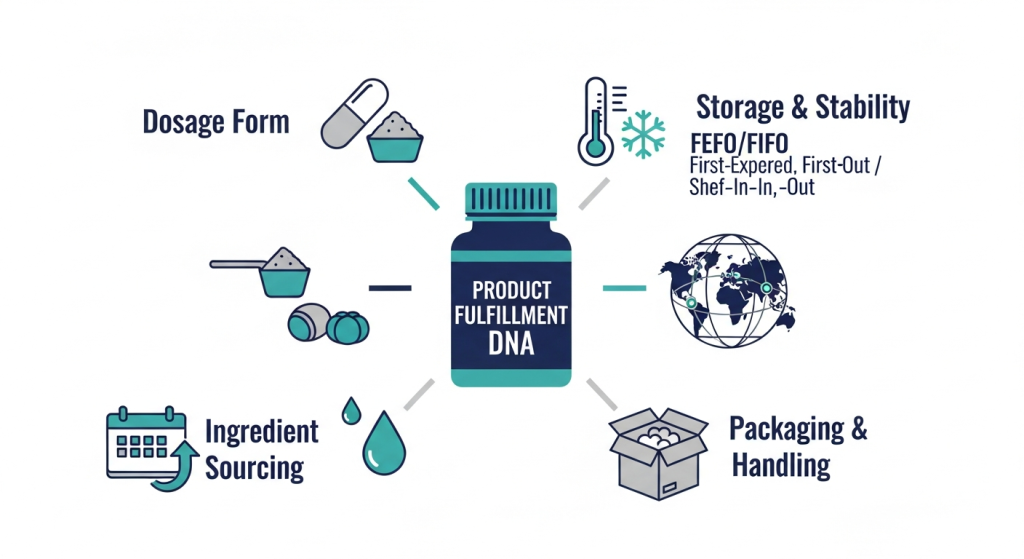
Every supplement has unique characteristics that dictate its fulfillment requirements. Understanding dosage form, stability, and handling needs is essential for building a scalable operation.
These decisions directly impact how your product is stored and shipped. Launch Fulfillment’s supplement fulfillment services are designed to handle temperature-sensitive products, batch tracking, and compliant storage requirements for nutraceutical brands.
Step 2: Navigate the Regulatory Maze
The supplement industry is heavily regulated under FDA oversight and DSHEA. This requires strict traceability, labeling accuracy, and storage standards.
For official guidance, review FDA dietary supplement regulations. Compliance isn’t optional, it must be embedded into your fulfillment operations.
A strong third-party logistics partner can help ensure lot tracking, recall readiness, and regulatory alignment are built into your day-to-day processes.
Step 3: Design for Deliverability
Your packaging is more than branding, it affects shipping cost, product safety, and customer trust.
Packaging size influences dimensional weight, while materials impact product protection. Launch Fulfillment’s pick, pack, and ship services help brands optimize packaging for both protection and cost efficiency.
Phase 2: Building Your Fulfillment Ecosystem
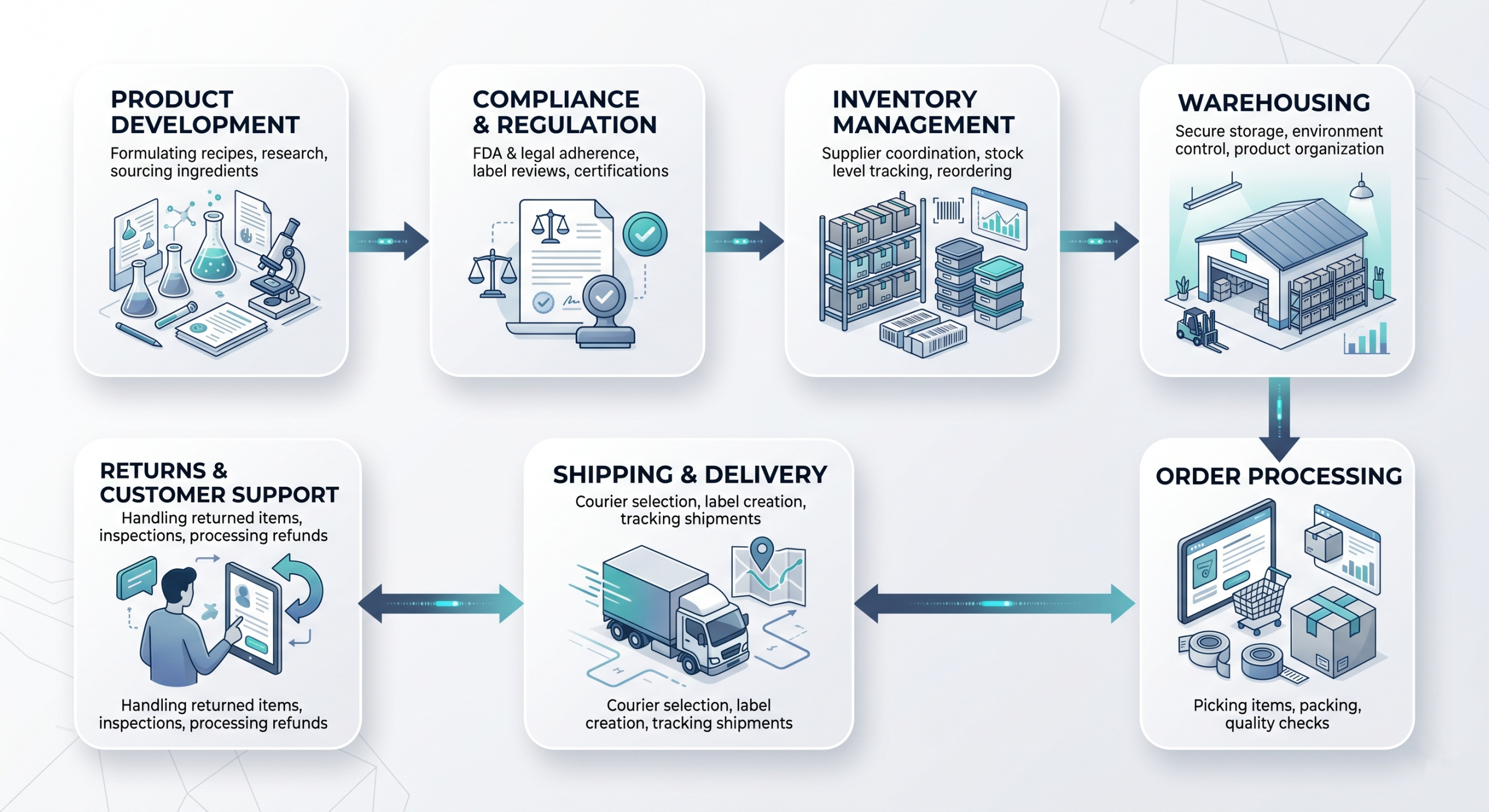
Step 4: Choose Your Partners Wisely
Your fulfillment partner directly impacts your ability to scale. Look for experience in supplement logistics, compliance, and inventory control.
Launch Fulfillment’s 3PL fulfillment services combine warehousing, order processing, and shipping into a single system built for growing DTC brands.
Step 5: Implement Inventory Management
Inventory is where most fulfillment problems start. Stockouts lead to lost revenue, while overstock ties up capital.
According to Shopify, poor inventory management is one of the leading causes of operational inefficiency in ecommerce.
Launch Fulfillment’s inventory management systems provide real-time tracking, FIFO/FEFO logic, and better visibility into stock levels.
Inventory issues turn into fulfillment problems fast.
Stockouts, expired products, and poor tracking don’t just hurt operations—they hurt your brand. A better system keeps everything aligned.
Step 6: Optimize Order Processing
Fast and accurate order fulfillment is essential for customer satisfaction. Errors increase returns, costs, and customer churn.
Efficient order management and processing ensures orders are routed, picked, and shipped without delays.
Step 7: Craft a Smart Shipping Strategy
Shipping is where fulfillment becomes customer-facing. Speed, cost, and reliability must all align.
Launch Fulfillment’s shipping solutions help brands optimize carrier mix, reduce zones, and improve delivery performance.
For broader industry insights, see National Motor Freight Traffic Association for freight classification standards.
Phase 3: Post-Purchase & Optimization
Step 8: Elevate the Unboxing Experience
Your customer experience doesn’t end at checkout. Packaging, delivery speed, and presentation all influence retention.
Launch Fulfillment’s subscription box fulfillment services support custom packaging, kitting, and repeat-order optimization.
Step 9: Manage Returns & Reverse Logistics
Returns are inevitable in ecommerce. Efficient reverse logistics reduces cost and improves customer satisfaction.
According to ReadyCloud, return rates can reach 30% in ecommerce.
A strong fulfillment system ensures returns are processed efficiently while maintaining compliance for supplement products.
Step 10: Leverage Data for Optimization
Data-driven fulfillment is what separates scalable brands from reactive ones.
AI-driven forecasting tools can improve inventory accuracy and reduce stockouts. Learn more from McKinsey Operations Insights.
Launch Fulfillment integrates real-time data, reporting, and analytics into every fulfillment workflow, helping brands continuously improve.
Ready to Build a Smarter Supplement Fulfillment System?
If your fulfillment setup is holding back growth, it’s time to rethink how your operations are structured.
Talk to Launch Fulfillment about building a scalable, compliant, and cost-efficient fulfillment strategy tailored to your supplement brand.
Ready to scale your supplement brand without fulfillment risk?
Build a compliant, scalable fulfillment system that protects your products, your customers, and your growth.
Final Thoughts
Mastering supplement fulfillment requires more than logistics, it requires strategy, systems, and the right partners. From compliance and inventory to shipping and customer experience, every step matters.
By implementing a structured fulfillment strategy and working with experienced partners like Launch Fulfillment, brands can reduce risk, improve customer satisfaction, and scale with confidence.
